

Why Are My Lower Teeth Crowding as I Get Older? A Chicago Cosmetic Dentist Explains
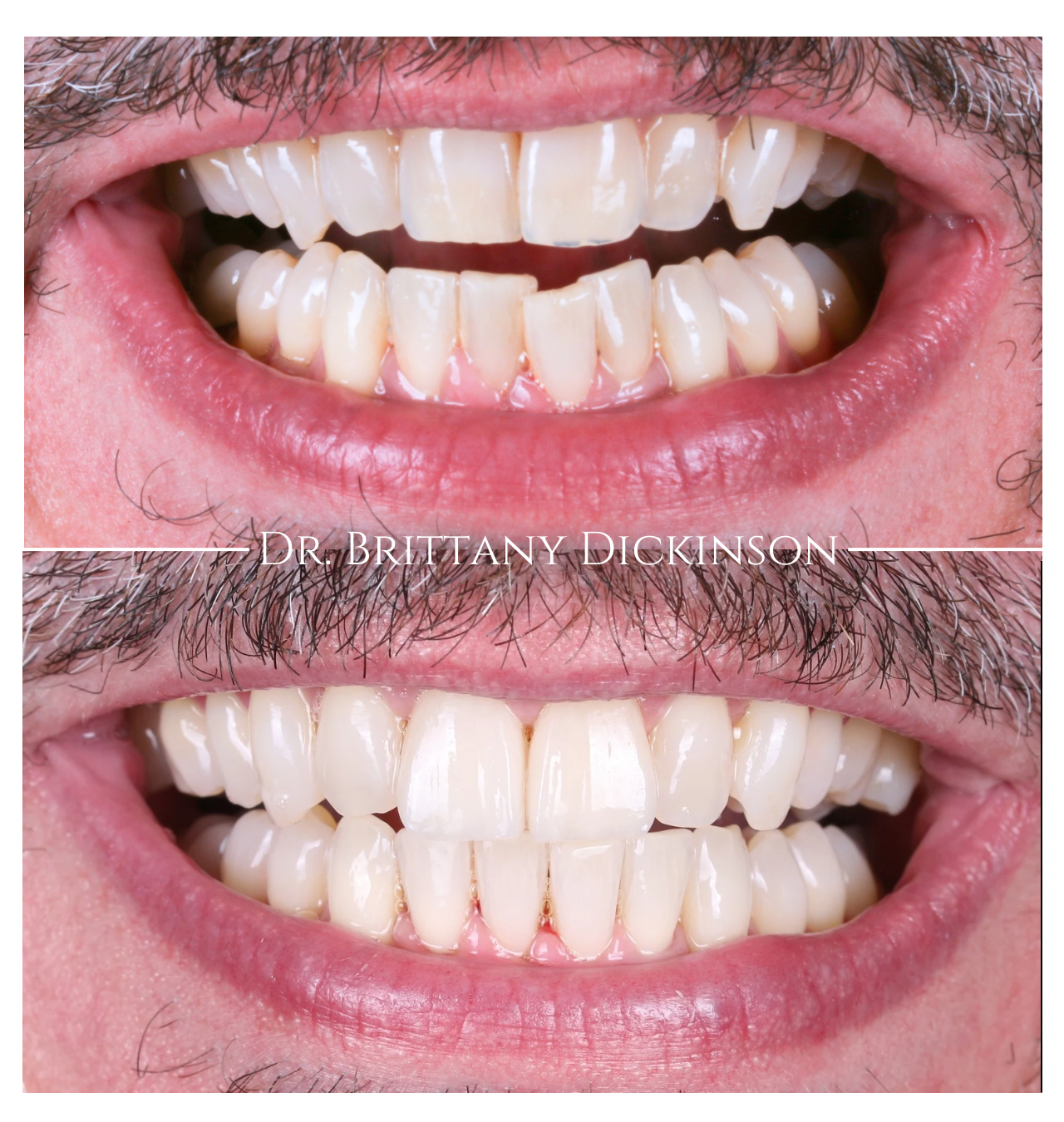
You smiled at yourself in the bathroom mirror this morning, looked closer, and there it was.
Your lower teeth aren't sitting the way they used to. One of them is twisting forward. Another is starting to overlap. The bottom arch — which was straight in your wedding photos, or your college photos, or just last year's photos — is quietly going crooked.
If you wore braces as a teenager, that feels especially unfair. You did the work. You wore the retainers (for a while, anyway). And now, somewhere in your 30s, 40s, or 50s, your lower teeth are crowding back together like none of that ever happened.
You're not imagining it. And you're not alone. Lower-teeth crowding is one of the most common cosmetic concerns I see in my Lakeview practice — especially among women in their 30s through 50s who have otherwise beautiful smiles. Here's what's actually happening, why it's happening to you specifically, and what your real options are.
— — —
What's Actually Happening to Your Lower Teeth?
The technical name for what you're seeing is late adult crowding or mandibular incisor crowding — and it's the result of three quiet, decades-long forces working on your bottom teeth at the same time.
1. Your jaw is still changing. Most people assume the jaw is "done growing" after your early twenties. It's not. Your mandible (lower jaw) continues to subtly change shape and position throughout adulthood, and that movement is almost always forward and slightly inward. As the jaw rotates, the space available for your lower front teeth shrinks. Something has to give — and it's your teeth.
2. Your teeth naturally drift forward over time. This is called mesial drift, and it happens to everyone, slowly, for your entire life. Every time you chew, your teeth get a microscopic forward push. Multiplied across forty or fifty years of eating, that drift becomes visible. The lower front teeth — which have less bone support and smaller roots than your molars — show it first.
3. Your retainers stopped doing their job. If you wore braces in your teens or twenties, you were almost certainly given a retainer. Almost no one wears them forever. The retainer holds your teeth in place against the forces I just described — and the moment you stop wearing it, those forces win. Most adult lower-teeth crowding I see is post-orthodontic relapse, even decades after the braces came off.
Add in a few other accelerators that are common in adults — teeth grinding (which Chicago professionals do at staggering rates), missing back teeth that change how your bite settles, or simple age-related bone changes — and the picture comes together.
You didn't do anything wrong. Your teeth are doing exactly what teeth do when they're given enough time. They move.
— — —
Why This Bothers You More Than You Expected
Most patients who book a consultation about lower-teeth crowding tell me some version of the same story: I wasn't going to do anything about it. It's just on the bottom. Nobody really sees it.
Then they catch themselves in a photo, or a video call, or a mirror at the right angle, and they realize they see it. Their lips part slightly when they speak. Their smile drops half an inch when they laugh. And the lower arch — the one that's supposed to be the quiet background of their smile — has become the thing they can't stop noticing.
That experience tells you something important about how smile aesthetics actually work. A smile is read as a whole, not in parts. Your upper teeth might be perfect, but if the lower arch is crooked or crowded, the eye registers asymmetry without quite being able to name what it's looking at. It just reads as "something feels off."
This is one of the reasons I built my practice around what I call Facially Driven Smile Design — designing every cosmetic case in relation to the whole face, not just the teeth in isolation. A small change to the lower arch, made thoughtfully, can rebalance a smile in a way patients consistently describe as "looking like themselves again."
— — —
What Actually Works to Fix It (and What Doesn't)
There are a lot of options floating around the internet for lower-teeth crowding. Most of them are wrong for most adults. Here's what's actually realistic for someone in their 30s, 40s, or 50s who wants a refined fix, not a teenage one.
✅ Invisalign Express — the right tool for most cases
For mild to moderate lower-teeth crowding — which is what I see in 80% of adult patients who come in for this concern — Invisalign Express is almost always the right choice.
It's a streamlined version of full Invisalign, designed specifically for limited cases. You wear 5 to 7 sets of clear aligners over 3 to 6 months. They're virtually invisible. There's no metal, no brackets, no awkward orthodontist office. Treatment is shorter, more affordable, and built for adults who want a refinement, not a teenage-braces experience.
The price at our Lakeview practice is $5,500 all-in, which includes your final retainer. (Most providers quote Invisalign without retainers and surprise patients with a $400–$600 retainer charge at the end of treatment. We don't do that. The number we quote on day one is the number you pay.)
If you're a Lakeview or Lincoln Park resident considering Invisalign Express for lower-teeth crowding, here's the full breakdown of what the process looks like, what to expect at your first appointment, and how we plan the case: [Fixing Lower Teeth Crowding with Invisalign Express in Lakeview, Chicago](https://chicagoaestheticdentistry.com/straightening-lower-teeth-crowding-in-lakeview-chicago).
✅ Full Invisalign — when the crowding is more significant
If your crowding extends beyond the front four lower teeth, if there's a bite issue contributing to the crowding, or if your upper arch also needs work, full Invisalign Comprehensive is the right tool. It's longer (9 to 15 months) and a larger investment ($7,000 all-in at our practice, also retainer-included), but it lets us correct both arches together and address any bite issues that might be driving the crowding in the first place.
How do you know which one you need? That's what a consultation answers. I scan both arches in 3D, run a simulation of your treatment plan, and we look at the actual movements your case requires before either of us commits to anything.
✅ Composite bonding (in very specific cases)
For one or two slightly twisted lower teeth — not true crowding, but a single tooth that's rotated a few degrees — composite bonding can sometimes be a faster, more affordable fix. We reshape the visible surface of the tooth so it reads as straight, without moving anything. This is a niche application and only works for very mild cases, but it's worth knowing about.
🛑 What I don't recommend
A few options that get pitched online but that I rarely recommend for adult patients with lower-teeth crowding:
At-home aligner kits. I won't name them, but you've seen the ads. They skip the in-person scan, the bite analysis, and the supervision. For lower-teeth crowding specifically — where bite forces and jaw movement are part of why the crowding is happening — skipping clinical oversight can mean the case finishes worse than it started.
Veneers as a "cosmetic shortcut" to fix crowding. Veneers are for changing tooth color, shape, and surface texture as well as crowding. They are too agressinve for simply fixing alignment. If a dentist offers to veneer your way out of lower crowding, find a different dentist.
"Just file it down." Aggressive enamel reduction to disguise crowding strips healthy tooth structure and accelerates wear. It's a permanent solution to a temporary problem.
— — —
What to Expect at a Consultation
If you've decided you want to actually do something about your lower-teeth crowding, the consultation is the first real step. Here's what it looks like at our Lakeview practice:
3D scan of both arches. Painless, no impressions. Takes about 5 minutes. We use this to map exactly where every tooth sits and how your bite closes.
Treatment-plan simulation. I show you, on screen, exactly how your teeth would move with Invisalign Express vs. full Invisalign — and what each version of "after" actually looks like for your face.
Transparent pricing conversation. I give you the all-in number, what it includes, and what the timeline is. No surprises, no upsells, no pressure.
Insurance paperwork. Our practice is out-of-network / fee-for-service, but we submit the insurance paperwork on your behalf so any reimbursement comes back to you directly from your insurer. You don't have to chase anything.
You walk out with a clear answer on whether this is worth doing for you — and what it would cost and take.
— — —
Common Questions About Adult Lower-Teeth Crowding
Is lower-teeth crowding actually harmful, or just cosmetic?
It's primarily cosmetic, but there are real functional consequences over time. Crowded teeth are harder to clean, which can lead to more plaque buildup, tartar, gum inflammation, and uneven wear. The longer it goes uncorrected, the more those secondary issues compound. Most adults choose to fix it for cosmetic reasons and end up with the functional benefits as a bonus.
Can I just get my old retainer out and start wearing it again?
Honestly, no — and please don't try. Your teeth have moved. Your old retainer no longer fits the position your teeth are in now. Forcing an old retainer onto shifted teeth can crack the retainer, hurt your gums, or shift other teeth in unintended directions. If you want to stabilize where you are, you need a new retainer based on your current bite.
Will my teeth crowd again after Invisalign?
Only if you don't wear your retainer. We finish every Invisalign case with a custom retainer included in the treatment cost. As long as you wear it nightly (which is what we recommend for life — yes, life), your teeth stay where we put them.
How much does this typically cost in Chicago?
At our Lakeview practice, Invisalign Express is $5,500 all-in (including retainer). Full Invisalign Comprehensive is $7,000 all-in. We're out-of-network with insurance, which means you pay us directly, but we submit the insurance paperwork on your behalf so any reimbursement comes back to you. Most adult lower-crowding cases qualify for Express.
How long do I have to decide?
The longer you wait, the more lengthy and expensive the case becomes. Lower-teeth crowding doesn't reverse on its own — it just gets more pronounced over time. A case that's a clean Express candidate today might need Comprehensive treatment in three or four years. There's no urgency in the medical sense, but there is a real tradeoff in cost and treatment length the longer you wait.
— — —
The Bottom Line
Your lower teeth are crowding because that's what teeth do without retainers, over decades, while your jaw quietly changes shape. It's not a sign you did anything wrong. It's a sign you have a body that's been doing exactly what it's supposed to do.
The good news is that it's also one of the most predictable, most refined, most adult-appropriate cosmetic dentistry problems to fix. Three to six months in Invisalign Express, designed thoughtfully around your face, with a clear all-in price and a retainer that protects the result.
If you're in Lakeview, Lincoln Park, Wicker Park, or the Gold Coast and you've been quietly noticing this in the mirror for a while, the next step is just a consultation. We'll scan your teeth, show you the plan, and you'll walk out knowing whether this is worth doing.
[See the full breakdown of how we fix lower-teeth crowding in Lakeview →](https://chicagoaestheticdentistry.com/straightening-lower-teeth-crowding-in-lakeview-chicago)
— — —
Dr. Brittany Dickinson is an AACD-member cosmetic dentist and practice owner of Chicago Aesthetic Dentistry, located at 3346 N. Paulina St. in Lakeview Chicago. She completed a 2-year Invisalign mentorship program in 2019 and has planned 200+ adult Invisalign cases. The practice is out-of-network and submits insurance paperwork on patients' behalf.