

Invisalign vs. Braces for Adults: How a Chicago Cosmetic Dentist Decides Which One Is Right for You
If you've spent any time on Google trying to decide between Invisalign and braces, you've probably noticed the same thing I notice every week in consultations: most of what's out there is written for teenagers, or it's a sales pitch dressed up as advice.
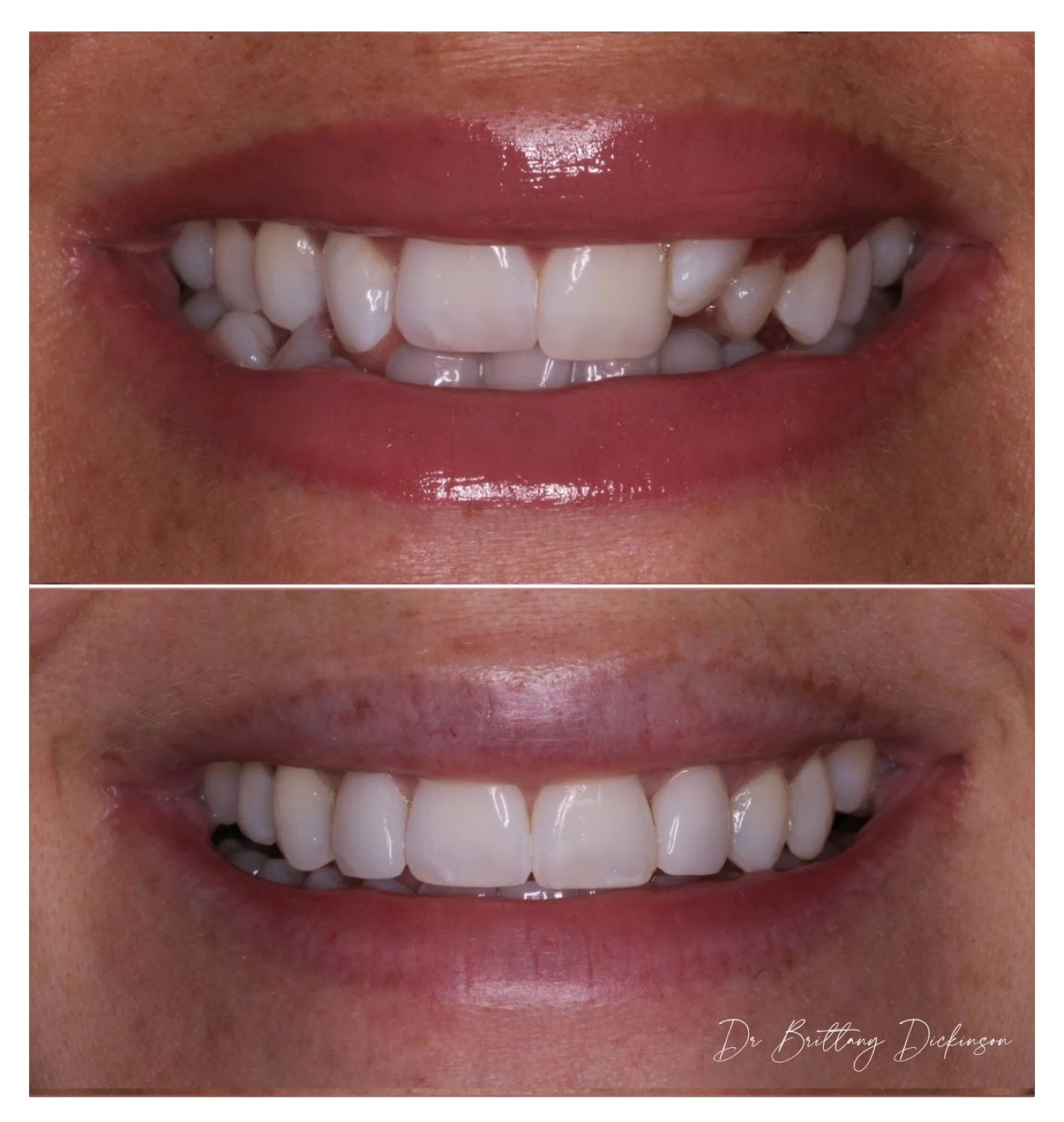
So let me speak directly to the adult patient — the 32-year-old attorney whose teeth shifted a year after she stopped wearing her retainer, the 47-year-old mom who finally has time to think about her own smile, the 28-year-old executive who's tired of covering his mouth in photos. If you're trying to decide between Invisalign and traditional braces, here's how I actually think about it in my Lakeview Chicago practice.
The Real Question Isn't "Which Works Better?"
Both Invisalign and traditional braces move teeth. Both have decades of clinical data behind them. Both can produce beautiful, stable results when planned and executed well.
The real question is: which one fits your life, your face, and the long-term smile you actually want?
That's the question almost no online article answers honestly, because the answer depends on the person sitting in the chair — not on a generic feature comparison.
Here's the framework I walk every adult patient through.
How I Think About the Decision: Five Real Considerations
1. Are We Treating an Orthodontic Problem — or Designing a Cosmetic Smile?
This is the question that changes everything.
If your only goal is to correct a bite issue or move teeth into a textbook-perfect arrangement, traditional braces and Invisalign will both get you there. Your orthodontist or general dentist will pick based on case complexity.
But if part of why you're considering treatment is cosmetic — you want a smile that flatters your face, frames your lips properly, and looks like the version of you you'd been hoping for — that's a different conversation.
In my practice, every Invisalign case is designed using what I call facially driven smile design. Before I plan a single tooth movement, I study how your upper lip drapes when you smile, how the proportions of your teeth relate to your jawline, and how the position of your front teeth supports the rest of your face. Then we map the movements.
This is the part most orthodontic software doesn't catch. It auto-generates an "ideal" alignment based on textbook arches — not on your face. When you let the software decide, you can end up with technically straight teeth that still look slightly off because they don't sit right under your lip.
For an adult cosmetic patient, this distinction matters enormously. It's the difference between "I got my teeth straightened" and "I finally look like myself when I smile."
2. What Does Your Daily Life Actually Look Like?
For adults, lifestyle isn't a soft consideration — it's a deal-breaker.
Traditional braces are visible. They will show up in every Zoom call, every wedding photo, every dinner with a client. For some adults, that's fine. For most of the patients I see in Lakeview, it's not.
Invisalign is nearly invisible in normal conversation. You wear the aligners 20–22 hours a day, but you remove them to eat, drink anything except water, and brush. There are no food restrictions, no wires snapping on a Friday afternoon, no emergency appointments before a board presentation.
The trade-off: Invisalign requires discipline. If you can't commit to wearing your aligners 22 hours a day, traditional braces (which can't be removed) may actually be the more realistic choice. I'd rather have an honest conversation about this at the consult than watch a patient struggle six months in.
3. How Complex Is the Movement You Actually Need?
There's a myth that Invisalign only works for "simple" cases. That hasn't been true for years.
Modern Invisalign — combined with smart use of attachments (more on that in Thursday's post), elastics, and occasional adjunct procedures — can handle the vast majority of adult cosmetic cases. In my own practice, the cases that genuinely require traditional braces are the exception, not the rule.
That said, certain very complex bite cases, surgical orthodontic cases, or major skeletal issues still belong with an orthodontist using fixed appliances. The honest answer to "can Invisalign do this?" depends on the specific movements your smile needs. That's a question a thorough consultation — including a 3D scan and a facial analysis — can answer in about 45 minutes.
4. How Much Discretion Do You Need at Work?
This one is underestimated.
Adult patients in client-facing roles — sales, law, consulting, medicine, education, hospitality — often tell me Invisalign is the only option they'd actually go through with. Not because braces are objectively bad, but because being suddenly visible-with-braces in a professional context feels like a step backward.
Invisalign solves this in a way nothing else does. Most colleagues and clients never notice. Patients who choose to mention it usually get asked about it once, then it disappears into the background of daily life.
5. What's the Plan AFTER You Finish?
This is the question almost no provider asks during the initial consultation. It's also the most important one for long-term cosmetic outcomes.
When I plan an Invisalign case for an adult, I'm not just thinking about month 10 — I'm thinking about year 10. Will the teeth stay where we move them? (Yes, if you wear your retainer.) Will whitening look different on the new alignment? (Often, yes — and we plan for it.) If you want porcelain veneers later, will the new tooth positions make them more conservative? (Almost always — and that's a major reason to align first.)
In my Lakeview practice, every Invisalign plan includes the final retainer or night guard in the all-in fee. A lot of providers don't quote it that way, which causes sticker shock at the end. I'd rather you know the full picture before we start.
A Quick Side-by-Side: Where Each One Wins
Invisalign tends to be the better choice for adults who:
Want a discreet treatment they can take out for important meetings, photos, or a special dinner
Are planning future cosmetic work (whitening, veneers, bonding) and want a foundation that supports those treatments
Have the discipline to wear aligners 22 hours a day
Prioritize a result that looks designed for their face, not a generic alignment
Don't want food restrictions or emergency appointments interrupting work travel
Traditional braces still make sense for adults who:
Have a genuinely complex orthodontic or surgical case that needs fixed appliance control
Honestly know they won't wear removable aligners consistently
Are working with an orthodontist on a multi-phase plan where braces are the planned starting point
There's no universal winner — only the right answer for the person in the chair.
What an Invisalign Consultation Actually Looks Like in Chicago
When you come into Chicago Aesthetic Dentistry for an Invisalign consult, here's what to expect:
A 3D scan of your current smile takes about three minutes. We talk through what you actually want — not just "straighter," but the specific things you notice that bother you. I do a facial analysis (this is the part that changes most plans). Then we look at a digital preview of where your teeth could move, and I walk you through the timeline, the trade-offs, and the all-in investment.
If Invisalign isn't right for you, I'll tell you. Sometimes the honest answer is "you don't need this — you just need whitening." Sometimes it's "this is a case for an orthodontist, and here's who I refer to." Sometimes it's "this is a great case for Invisalign, and here's exactly how I'd sequence it."
Whatever it is, you'll leave knowing.
Ready to Find Out What's Actually Right for Your Smile?
If you've been quietly carrying this question around — maybe for years — the consultation is where it gets clear.
Book your Smile Design Consultation →
Or call our Lakeview office at 773-883-1818. We're open Monday through Thursday and we'll find a time that works around your schedule.