

What Does a Cosmetic Dentist Actually Do (That a General Dentist Doesn't)?
Every dentist can technically place a veneer. Every dentist can technically do whitening. So what does a "cosmetic dentist" actually do differently?
It's a fair question, and the answer isn't marketing — it's a fundamentally different approach to the work. The training is different, the tools are different, the appointment length is different, and most importantly, the philosophy is different.
I'm Dr. Brittany Dickinson, cosmetic dentist and owner of Chicago Aesthetic Dentistry in Lakeview, and a member of the American Academy of Cosmetic Dentistry (AACD). Let me walk you through what a cosmetic-focused practice actually does that a general dentist may not — so you can decide when each is the right fit.
First, the overlap
There's real overlap. General dentists and cosmetic dentists both:
Attended the same 4 years of dental school
Are licensed to perform the same procedures
Do cleanings, exams, fillings, crowns, root canals
Can place veneers, do whitening, and offer Invisalign
So on paper, both are "dentists." The difference isn't legal or credential-based in most states — it's what the dentist has chosen to focus on, how much of their weekly practice is cosmetic work, and how they've invested in the tools, training, and lab relationships that shape cosmetic outcomes.
That difference shows up in the finished smile.
What a cosmetic-focused practice actually invests in
1. Post-graduate cosmetic training
Dental school teaches you a little bit of everything — fillings, crowns, extractions, endo, oral surgery, some cosmetic basics. It does not teach you smile design, facially driven case planning, master ceramist collaboration, or the aesthetic principles that separate "acceptable" from "beautiful."
Cosmetic dentists pursue that training after dental school through continuing education programs, hands-on cadaver courses, membership in organizations like the American Academy of Cosmetic Dentistry (AACD), and — most importantly — years of doing hundreds of cosmetic cases under mentorship.
I've spent 16 years focused primarily on cosmetic work. My continuing education budget every year is dedicated to smile design, occlusion (bite), and material sciences — not because I don't respect general dentistry, but because those are the skills that make cosmetic outcomes better.
2. Time per appointment
A general dentist's smile makeover consultation might be 30 minutes. Ours is 60 minutes. That extra hour is where the actual smile design happens — the facial photography, video review, digital scans, bite analysis, and preliminary preview.
A general dentist might place a set of veneers in a single 2-hour visit. We schedule prep as a 3–4 hour appointment, and bonding as another 3–4 hour appointment, with a trial smile in between. That's not because we're slow — it's because rushing a cosmetic case is how you end up with a smile that looks technically correct but "off."
Time is where the artistry actually lives.
3. Master ceramist relationships
Every veneer, crown, or cosmetic restoration is fabricated in a dental lab — but not every lab is equal. A high-volume commercial lab produces functional restorations quickly, at low cost, using semi-automated processes. A master ceramist is a small studio (often a single artist or a tiny team) who hand-layers each veneer, matching subtle color variation, translucency, and micro-texture to your face and personality.
The difference is night and day. My ceramist and I have worked together for years — we speak the same design language, review cases together, and iterate on details until they're right. That relationship is worth more than any single piece of equipment.
You cannot fake this with technology. Fast, cheap veneers look like fast, cheap veneers, no matter how good the digital scan was.
4. Facially driven design tools
At my practice, every cosmetic case starts with:
Full facial photography (not just teeth close-ups)
Digital scans and bite analysis
3D digital wax-up (so you see your future smile before we prep anything)
A trial smile step — you wear a preview of the finished result before we make it permanent
That toolkit isn't standard in general dentistry because it's not needed for fillings, crowns, or routine care. It exists specifically because facially driven cosmetic outcomes require it.
5. Occlusion (bite) obsessiveness
Beautiful teeth in the wrong bite fail. Fast. If your bite is uneven and we place gorgeous veneers on top of it, you'll be back within 2 years with chips, cracks, or debonded work.
Cosmetic dentists spend a lot of time analyzing how your teeth actually come together — front to back, side to side, at rest, in motion. If we need to level the bite before placing veneers, we do that. If you need a custom nightguard to protect the finished work, we build one. If your grinding pattern is severe, we address it before the cosmetic phase begins.
That obsessiveness is what makes veneers last 10–15 years instead of 3–5.
When to see a general dentist
A great general dentist is essential for:
Regular hygiene visits and cleanings
Cavity fillings
Standard crowns on back teeth
Root canals, extractions, or general restorative work
Kids' dentistry
Emergency care
Ongoing maintenance of your teeth and gums for life
Every cosmetic patient at my practice also has a general dentist they see for routine care. If you don't, we can coordinate with one. Cosmetic work is a specialization, not a replacement.
When to see a cosmetic dentist
You should see a cosmetic-focused practice when:
You're considering veneers — full smile design or single-tooth cosmetic
You want Invisalign for aesthetic reasons (not just alignment)
You're planning a smile makeover — multiple procedures coordinated together
You want cosmetic bonding on front teeth (repair, reshape, or close small gaps)
You've had cosmetic work elsewhere that "looks off" and want a second opinion
You want to be photographed, on camera, or on stage and your smile is holding you back
For any of those, the extra training and time investment of a cosmetic practice will show up in the final result. And critically, the difference is usually visible for the next 10–15 years — so it's worth choosing carefully.
What to ask when you're vetting a cosmetic dentist
If you're not sure whether a practice actually specializes in cosmetic work versus just offering it as a menu item, ask:
What percentage of your practice is cosmetic? (Real cosmetic dentists are usually 50%+)
How many veneer cases do you do per month? (Should be multiple, consistently)
Do you use a master ceramist? Can I see their work?
Do you do a digital preview or trial smile before you prep teeth?
How long is a smile design consultation at your office? (Under an hour is a red flag)
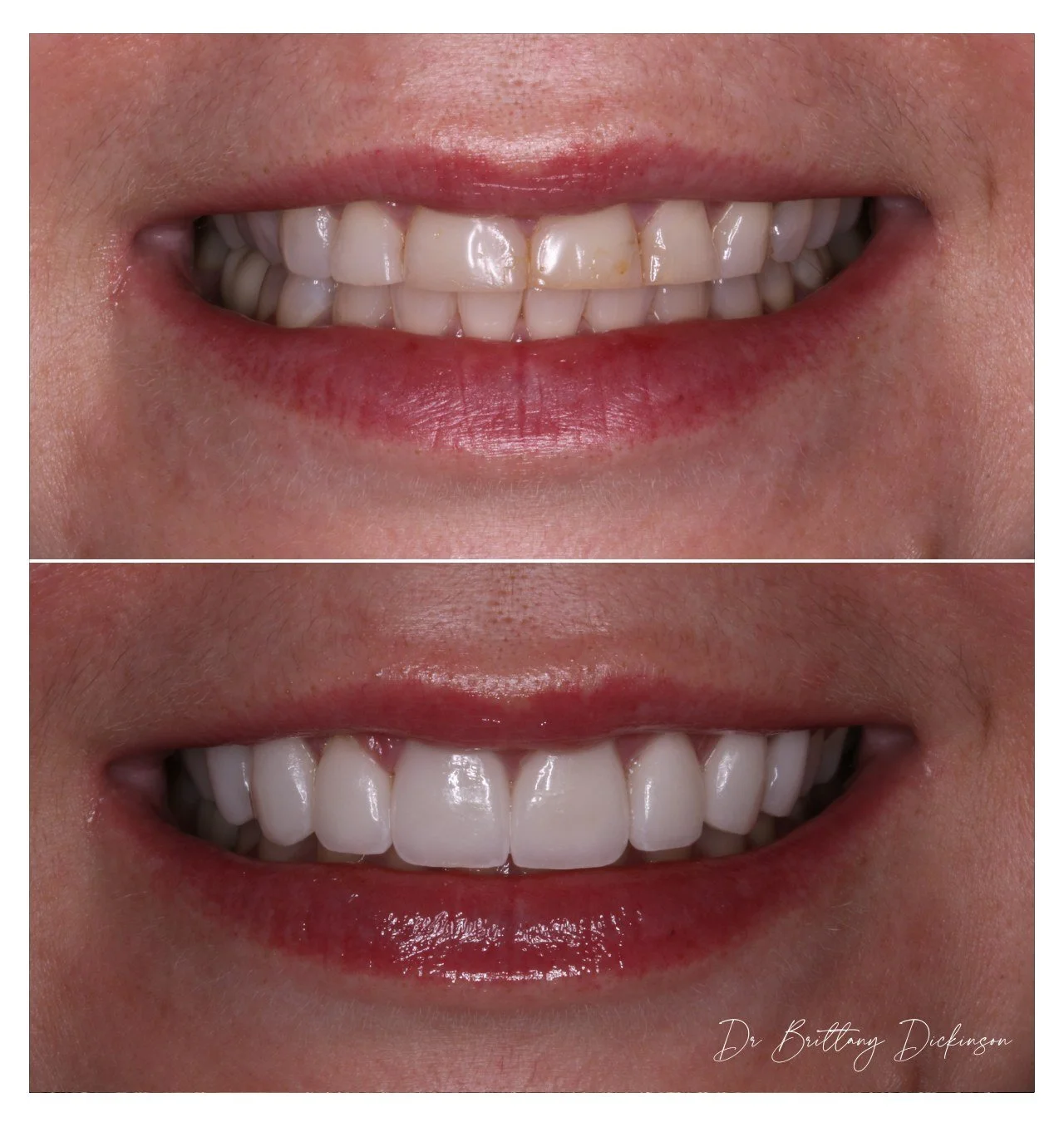
Can I see before-and-afters of your own patients, not stock photos?
Are you a member of the American Academy of Cosmetic Dentistry (AACD) or similar cosmetic-focused organization?
These questions filter fast. A cosmetic practice will answer them enthusiastically. A general practice offering cosmetic as an add-on will often pivot the conversation.
The bottom line
You should have both — a great general dentist for your ongoing routine care, and a cosmetic specialist for the work that will be visible in every photo you take for the next decade. They aren't competitors. They're partners in a well-designed dental life.
If you're considering veneers, Invisalign, whitening beyond store-bought, or a full smile makeover, the first step is a Smile Design Consultation — 90 minutes to talk through what you want, see a digital preview of what's possible, and get a real written estimate.
Ready to book? Call 773-883-1818 or book a Smile Design Consultation online. Chicago Aesthetic Dentistry — 3346 N. Paulina St., Lakeview.