

Porcelain Veneers vs. Lumineers: What's the Real Difference (And Which One Is Right for You?)
If you've been researching veneers seriously — the kind of research that leaves your browser with 40 open tabs by 11pm — you've probably hit a fork in the road.
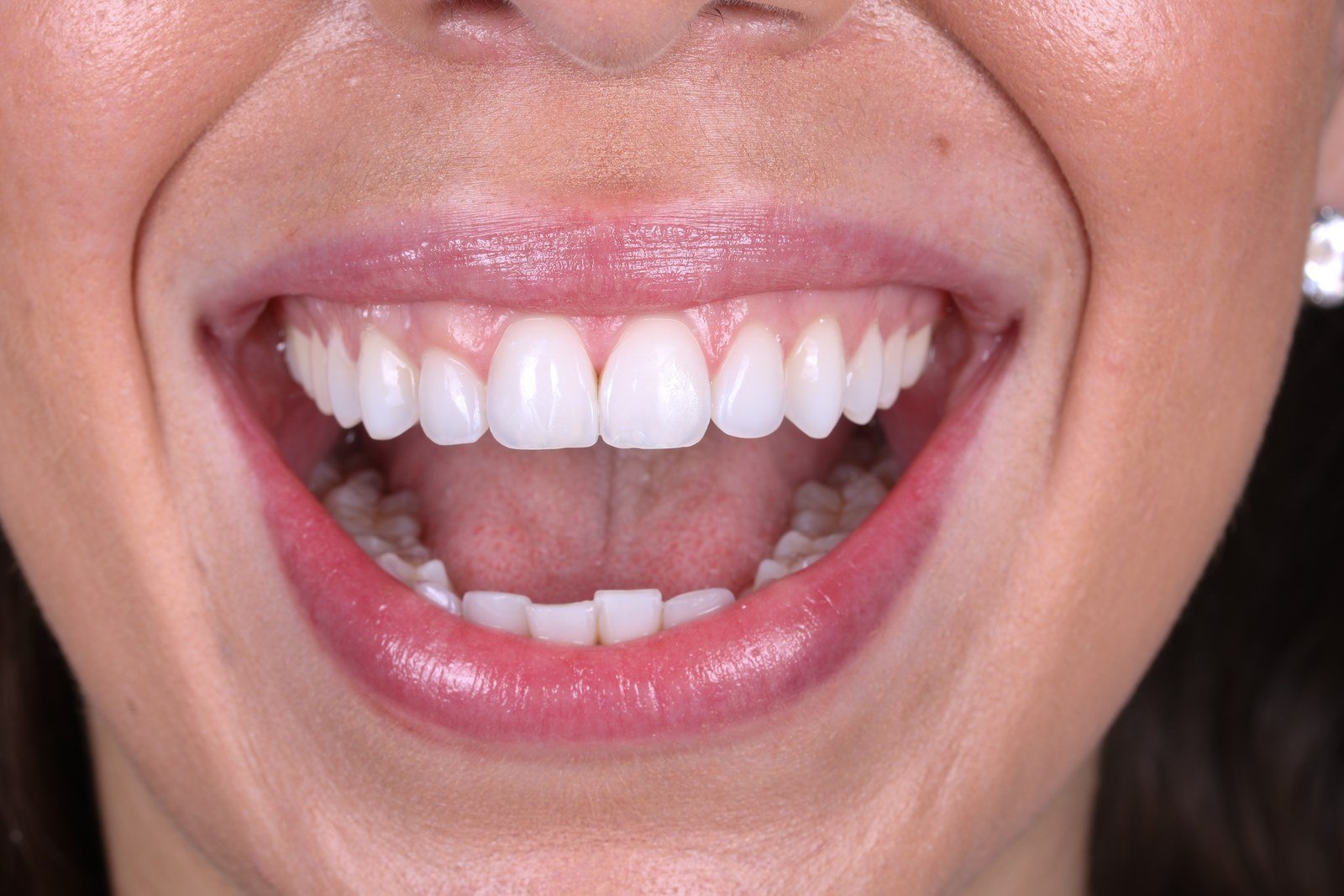
Porcelain veneers, or Lumineers?
The internet will tell you Lumineers are "the veneers you can get without shaving down your teeth." It'll tell you porcelain veneers are "the traditional option" — the one with drilling, temporaries, and a big commitment. And it'll tell you the decision is essentially about how much of your natural tooth you're willing to give up.
That framing is a little too clean, and it leaves patients making the wrong choice for the wrong reason more often than I'd like.
So let me answer the question the way I actually answer it in consultations at my Lakeview office — because there's a real, useful answer, and it starts by naming what you're actually comparing.
What Porcelain Veneers and Lumineers Actually Are
Both porcelain veneers and Lumineers are thin shells of dental porcelain bonded to the front of your teeth. Both are used to change shade, shape, length, alignment, and overall smile design. Both are permanent restorations, and both can look beautiful when they're done well.
The differences come down to three things: thickness, how much natural tooth we prepare, and what candidacy actually looks like.
Porcelain veneers (the "traditional" category) are typically 0.3–0.7 mm thick and require a small amount of enamel reduction — usually the equivalent thickness of a fingernail — to sit flush against the tooth without adding bulk. That prep is what allows the porcelain to be layered thin enough to catch the light naturally at the edges.
Lumineers are a specific brand-name product made from a proprietary porcelain called Cerinate. They're marketed as 0.2 mm thick — closer to the thickness of a contact lens — and are positioned as "no-prep" or "minimal-prep" because they can, in some cases, be bonded directly to the tooth surface with little or no reduction.
That distinction sounds like it should settle the question. It doesn't — because the right choice depends less on the product and more on your teeth and what you're trying to accomplish.
When Lumineers (or Prep-less Veneers) Are Actually the Right Answer
I'll say this plainly: there IS a patient for whom Lumineers or another prep-less porcelain option is a beautiful, conservative, correct choice. Here's what that patient tends to look like.
Small, undersized natural teeth.
If your teeth are already on the smaller side — short, narrow, or slightly recessed compared to the arch of your smile — adding 0.2 mm of porcelain doesn't create bulk. It fills in what's already missing.
No existing dental work on the teeth we're treating.
Prep-less veneers bond best to natural enamel. Old bonding, chipped edges that have been rebuilt, or previous crowns typically require preparation to blend properly.
Modest aesthetic goals.
Prep-less veneers are excellent for gentle shade improvement, filling small gaps, and softening minor shape irregularities. They're not the right tool for dramatically lengthening worn teeth, closing large gaps, or fully redesigning a smile.
Some dental anxiety about "shaving down teeth."
For patients who've been holding off on veneers for years because of that specific fear, prep-less options can be the honest bridge that gets them into treatment they're a good candidate for.
I have patients in the practice who are happy prep-less-veneer patients. When the candidacy is right, it's a beautiful option and I recommend it.
When Traditional Porcelain Veneers Are the Right Answer
For most of the patients I see for a full smile transformation, traditional porcelain veneers — with a small, conservative amount of preparation — produce a better result. Here's why.
Larger or fuller natural teeth.
If your teeth are already a normal-to-fuller size, adding 0.2 mm of porcelain on top of them creates bulk. You feel it. It reads as "thicker" in photos. A small amount of prep lets the final veneer sit at the same profile as your natural tooth, which is what makes it look and feel like a real tooth.
Existing dental work on the teeth in question.
Old bonding, small fillings on the visible surface, or teeth that have been previously repaired need those old materials to be removed in order to provide a clean surface so the porcelain can bond properly and blend seamlessly.
Any significant shape, length, or alignment change.
Rebuilding worn edges, closing meaningful gaps, correcting rotations, lengthening short teeth — these outcomes typically require the design freedom that comes with traditional porcelain veneers.
Natural-looking translucency at the edges.
This is the one that matters most and gets talked about least. The translucency at the incisal edge — the way light passes through the very tip of a real tooth — is what separates veneers that look real from veneers that look fake. That effect requires enough porcelain thickness to layer it in. Prep-less veneers, by virtue of being paper-thin, have less room for that layering. Traditional porcelain veneers, thanks to the conservative prep, have room to build in the exact translucency your natural teeth would have.
That's the trade you're actually weighing. Not "prep vs. no prep." "Enough porcelain to build in real light behavior vs. paper-thin and slightly flatter."
The Question I Wish More Patients Asked
Most patients ask me, "Which one is less invasive?"
The better question is, "Which one is going to give me a result I still love in ten years?"
Because both options are permanent commitments. Prep-less doesn't mean reversible. Once porcelain is bonded to a tooth, taking it off requires drilling it off — the underlying tooth is still altered, whether you prepped it or not. So "less invasive at the start" doesn't automatically mean "more forgiving over time."
What determines longevity is fit, bond quality, occlusion (how your teeth come together when you bite and grind), and whether the case was custom designed for your face in the first place. A beautifully done conservative-prep porcelain veneer will typically last 10–15 years. A Lumineer or prep-less veneer done well will last a similar range — but a Lumineer done in the wrong candidate can look bulky from day one and lead to gum issues and possibly cavities.
The dentist who's designing the case matters more than the brand of porcelain.
A Case From my Practice
A patient came in a few months ago convinced she wanted Lumineers. She'd read they were the "safe" option. She had six upper teeth she wanted to address — some length loss from grinding, mild discoloration, and one tooth that had been bonded years ago and no longer matched.
If I'd said yes to Lumineers, she would have gotten a result that was better than her current smile but noticeably bulky in photos, with the bonded tooth still showing through, and no meaningful length restored.
Instead, we did conservative-prep porcelain veneers. The prep on each tooth was minimal — a whisper of enamel reduction — but it gave us the room to rebuild the length she'd lost to grinding, blend past the old bonding, and layer in the translucency at the edges that reads as real.
That's the case I want you thinking about when you're weighing porcelain veneers vs. Lumineers. Not brand vs. brand. Candidacy vs. outcome.
See our Before and after Gallery
How We Actually Decide, Together
At the Smile Design Consultation, we look at your teeth, your face, your bite, and your goals — and we tell you honestly which option is the right one for you. Sometimes it's traditional porcelain veneers. Sometimes it's prep-less or minimal-prep. Sometimes it's neither, and the right answer is whitening plus targeted bonding, or Invisalign first to reposition teeth so we can be even more conservative later.
The best cosmetic dentistry isn't loyalty to a brand or a technique. It's loyalty to what your specific smile actually needs.
If you've been going back and forth between porcelain veneers and Lumineers, come in and let us walk through it with you. You'll leave the consultation knowing which one is right for you and why — and if it's neither, we'll tell you that too.