

What Is a Smile Makeover, Actually? A Chicago Cosmetic Dentist Explains the Process
"What is a smile makeover, actually?"
I get this question almost every week — usually from a patient who has been scrolling through before-and-afters for months and isn't quite sure what category the work they're seeing falls into. Veneers? Invisalign? Whitening? All three? Something else?
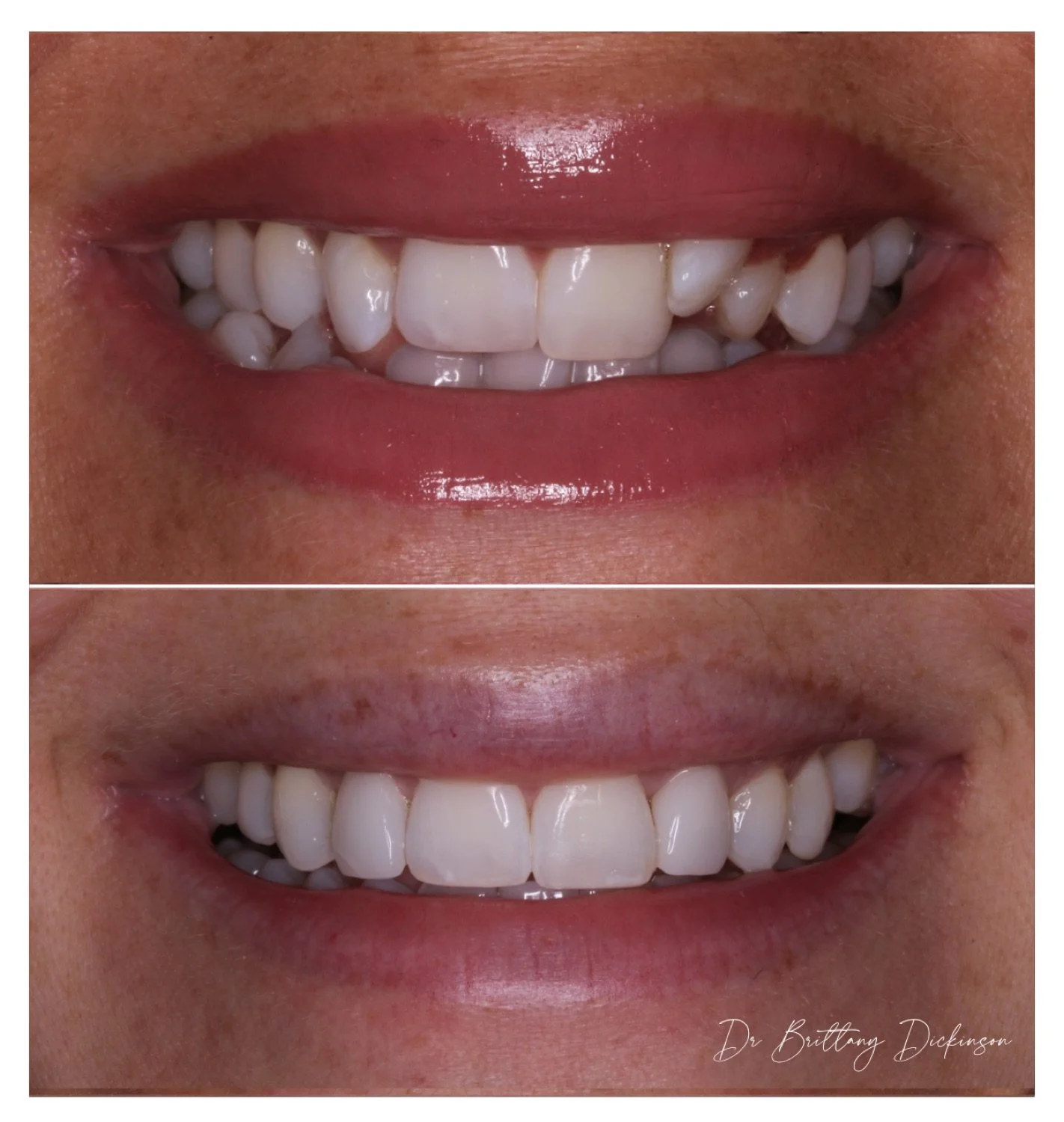
The short answer: a smile makeover is a custom plan that improves the way your smile looks using some combination of cosmetic and sometimes restorative treatments — designed around your face, not a generic ideal. The longer answer is more interesting, and it's what most cosmetic dentistry content gets wrong.
Let me walk you through what a real smile makeover actually involves — and why the part you can see (the porcelain, the aligners, the whitening) matters far less than the part you can't.
A smile makeover is a plan, not a service
The first thing to understand is that "smile makeover" isn't a procedure you book. It's a phrase that describes a coordinated treatment plan.
That plan might include:
Invisalign to gently reposition teeth that are crowded, gapped, or rotated
Porcelain veneers to refine the shape, size, or shade of teeth that need more than orthodontic correction can give
Professional whitening to lift the natural color of teeth so any restorations match brighter, fresher enamel
Composite bonding for smaller corrections — small chips, gaps between teeth, edges that have worn down
Gum contouring to even out the gum line so your smile reads symmetrical
Occasionally, restorative work (crowns, replacement of old fillings) when the goal is both aesthetic and functional
Most smile makeovers at my practice use two or three of these — not all of them. The fewest treatments needed to get the right result is the best plan, not the most.
The part nobody sees: facially-driven smile design
Here's where I diverge from how most cosmetic dentistry is practiced.
The reason a smile makeover works — or doesn't — has very little to do with the materials. Modern porcelain is incredibly good. Modern aligners are predictable. Modern whitening is safe. Those aren't the variables.
The variable is the design.
A smile makeover designed in isolation from the patient's face is a smile makeover that looks generic. Every cosmetic dentist has access to the same porcelain manufacturers. The thing that separates a smile that looks like you, but more rested and confident from a smile that looks like a smile someone gave you is whether the design was built around your facial proportions.
Here's what I'm actually looking at when I plan a case:
Your face shape. Oval, square, heart-shaped, longer in the lower third — each calls for different proportions in tooth shape and length.
Your jawline and chin position. These determine how tooth length should read against the rest of your face.
Your upper lip at rest. How much tooth shows when your face is relaxed? Where does your lip sit? This dictates the length of the incisal edge.
Your upper lip in animation. When you smile, when you laugh, when you talk — how does your lip lift, and what does it reveal?
Your smile line. The curve formed by your upper teeth following the inside of your lower lip when you smile. This curve should look balanced for your face — not flat, not exaggerated.
Your face symmetry. Most faces are not perfectly symmetric, and the smile should reflect that. A perfectly symmetric smile on an asymmetric face reads as artificial.
This is the work that happens before any porcelain is shaped or any aligner is printed. It's also the work that determines whether your smile, ten years from now, still looks like it belongs to you.
The process, step by step
Every smile makeover at my practice follows the same four-step process, regardless of which treatments end up in the final plan.
Step 1: Consultation and smile design
This is a real conversation, not a sales pitch. We talk about what's been bothering you, what you've been hesitant to say out loud, what "natural" means to you, and what your timeline looks like. I take detailed photographs of your face at rest, in conversation, and in full laugh. I take digital scans of your teeth and bite.
Then I go away and design. This is the part that takes the most time and is the most invisible to the patient. I'm sketching, measuring, considering material options, and putting together a treatment sequence that gets you to the right outcome with the least invasive work possible.
Step 2: Preview your smile
Before you commit to anything permanent — before any tooth is touched, before any aligner is ordered — you get to see what your smile is going to look like.
This is either a physical wax-up (a model of your future smile you can hold in your hand) or a digital preview, depending on the case. Some patients also have a "trial smile" temporarily placed on their teeth so they can walk out, look in mirrors, see how it photographs, and decide if it feels right.
If something doesn't feel right, this is where we adjust. The preview step is the trust-builder of the entire process — and it's the step most cosmetic dentists skip.
Step 3: Transformation
Once the design is approved, we begin the work in the order the plan calls for. For many patients, that means Invisalign first (a few months to a year), then veneers, then whitening to balance the lower teeth. For others, it's veneers only, placed in two to three appointments over a few weeks. For others, it's just whitening and bonding — a "mini" smile makeover that takes a few visits.
Throughout this stage, you wear temporaries that look and feel close to your final result. We adjust the fit, the shape, and the bite. By the time the final porcelain is placed, you've already lived in your new smile for weeks.
Step 4: The final result
The final restorations are placed. The bite is adjusted. The nightguard (always required for veneer patients — grinding is universal and will shorten the life of even the best porcelain) is fitted.
And then you walk out with the smile we designed together. Not a surprise. Not a stranger's smile. The one you previewed, refined, approved.
What a smile makeover is not
It's not a one-size-fits-all transformation. The Hollywood smile — uniform, bright-white, oversized — is going out of style for a reason. It looks like it doesn't belong to the face it's attached to.
It's not a way to chase a celebrity look. Most patients who come in asking for a specific celebrity smile leave with something different — because that smile was designed for that face, not yours. The right design for your face will look better on you than borrowing someone else's.
It's not a guarantee of perfection. Teeth are biological. They wear, they shift, they age. A well-designed smile makeover will last 10 to 15 years on the porcelain and a lifetime on your bite if you wear your nightguard and maintain your hygiene. But the goal isn't perfection — it's confidence that endures.
Who's a good candidate?
The truthful answer is: most adults who care about how their smile reads are candidates for some version of a smile makeover. The version varies dramatically.
Some patients only need one of the following — and I'll tell you so during the consultation, because doing less work to get the right result is always the better answer:
A single bonding to repair a chipped edge
Whitening only, with no other intervention
Invisalign only, with no veneers needed
A gum contouring to balance a smile that's already otherwise symmetric
Other patients need a fuller plan — Invisalign, veneers, whitening, sometimes gum contouring — to get where they want to go. Most fall somewhere in between.
The Smile Design Consultation exists exactly to figure out which version you are.
What to do next
If you've been wondering whether a smile makeover is for you — what it would involve, what it would look like, and whether the result would still feel like you — that's exactly the conversation a Smile Design Consultation is built for.
We'll talk. I'll listen. We'll figure out together what your version of this looks like — or whether you need a smaller intervention than you thought.
— Dr. Brittany Dickinson, Chicago Aesthetic Dentistry, Lakeview