

I Haven't Been to the Dentist in Years — How to Go Back Without the Shame, the Lecture, or the Pain
If you're reading this, there's a good chance you've typed some version of "haven't been to the dentist in years" into Google more than once. Maybe at 11 PM. Maybe after a tooth started bothering you. Maybe after a friend casually mentioned her veneers and you realized you couldn't remember the last time you sat in a dental chair without flinching.
I see this every single week in my Lakeview practice. Patients who haven't been seen in five, ten, sometimes more than fifteen years. They walk in braced for a lecture and a long, expensive list of everything that's wrong.
That is almost never what actually happens.
I want to tell you what the first visit back actually looks like in our office, why it doesn't have to be scary, and how to find a dentist who'll meet you where you are — instead of making you feel small for being there in the first place.
Why "Just Make an Appointment" Doesn't Work for Anxious Patients
When someone tells me they've been avoiding the dentist, the reason almost always belongs to one of four buckets:
A bad experience. A previous dentist who didn't listen when you said it hurt. A cleaning that left you crying in your car. A treatment plan that felt like a sales pitch.
Shame. You know something is wrong. You've watched it get worse. The longer you waited, the more embarrassing it felt to walk in.
Cost or insurance uncertainty. You're not sure what anything costs. You're worried about being upsold. You don't want to commit to a $5,000 plan in your first ten minutes in a chair.
Life. You moved cities. You changed jobs. You had kids. You had a health event. The dentist quietly slipped off the list and never made it back.
Telling someone in any of those buckets to "just make an appointment" is like telling someone who's afraid of flying to "just book a ticket." It misses the entire point.
The fix isn't more willpower on your end. The fix is finding an office where the first visit is designed around the fact that you've been away — not in spite of it.
What a Good First Visit Back Actually Looks Like
Here's how we structure it at Chicago Aesthetic Dentistry when a patient tells us they've been away for years. (You can use this as a checklist for any office you're considering, not just ours.)
Step 1: The conversation comes first.
Before any X-rays, before any instruments, before any plan — we sit down and talk. What are you worried about? What's hurting, if anything? What do you want your smile to look like in a year? What's off the table for today? This conversation is the appointment. If a dentist isn't willing to spend real time on it, that's a red flag.
Step 2: Slow, gentle imaging.
Modern digital X-rays are fast, low-radiation, and much more comfortable than the film ones you probably remember. We take only what we need to make a safe assessment. If you have a sensitive gag reflex or any past trauma around X-rays, we work around it.
Step 3: A gentle exam — at your pace.
We look. We don't poke aggressively. If something is tender, we stop and note it instead of pushing through. You're in charge of the pace. Hand up = pause.
Step 4: A plan with options, not ultimatums.
After the exam, we walk through what we see — in plain English, with photos so you can actually see what we're talking about. Then we present a plan in phases, ranked by what's urgent (anything causing pain or active damage) versus what's elective (the cosmetic improvements you might want eventually). You decide what you want to address now and what waits.
Step 5: You leave with the next step decided — not the whole journey.
You don't have to commit to ten appointments on day one. You commit to one. The next one. That's it.
"But What If My Teeth Are Really Bad?"
I'll be direct with you: in all my years of practice, I have never once seen a patient whose mouth was as bad as they thought it was. Not once.
Your mouth is your blind spot. You've been looking at it in the mirror every day for years, watching it slowly drift. You've built a story about how disastrous it must look. The version of your mouth that lives in your imagination is almost always significantly worse than the version we actually see.
And even when there are real problems — a cavity that grew, a crown that failed, gum tissue that's receded — none of it is interesting to me as a judgment. It's just information. It tells us what to address and in what order. That's it.
You will not be shamed in my office. You will not be lectured. You will not be made to feel like you should have come in sooner. We know you should have. We also know there's a reason you didn't. Both can be true.
What to Look for in a Dentist Before You Book
If our office isn't the right fit for you (you might not be in Chicago, or you might want a different specialty), here's what to vet for in any practice when you've been away a long time:
Do they offer a consultation appointment? A real one — not a "we'll do a cleaning and exam and present a plan at the end." A no-treatment consult means they're willing to invest time in the conversation before they invest instruments.
**Do their reviews mention the experience, not just the work?** Look for words like "calm," "didn't make me feel bad," "took the time," "explained everything." The dentistry can be technically excellent and the time in the chair can still be miserable. You're choosing both.
Is the dentist the one you'll see consistently? In a smaller practice you'll see the same person at every visit. That continuity matters for anxious patients more than almost anything else.
Do they discuss cost openly before you commit? A good office will walk through fees and what your insurance reimburses before you sit in the chair for treatment, not after.
"What If I Want Cosmetic Work Eventually?"
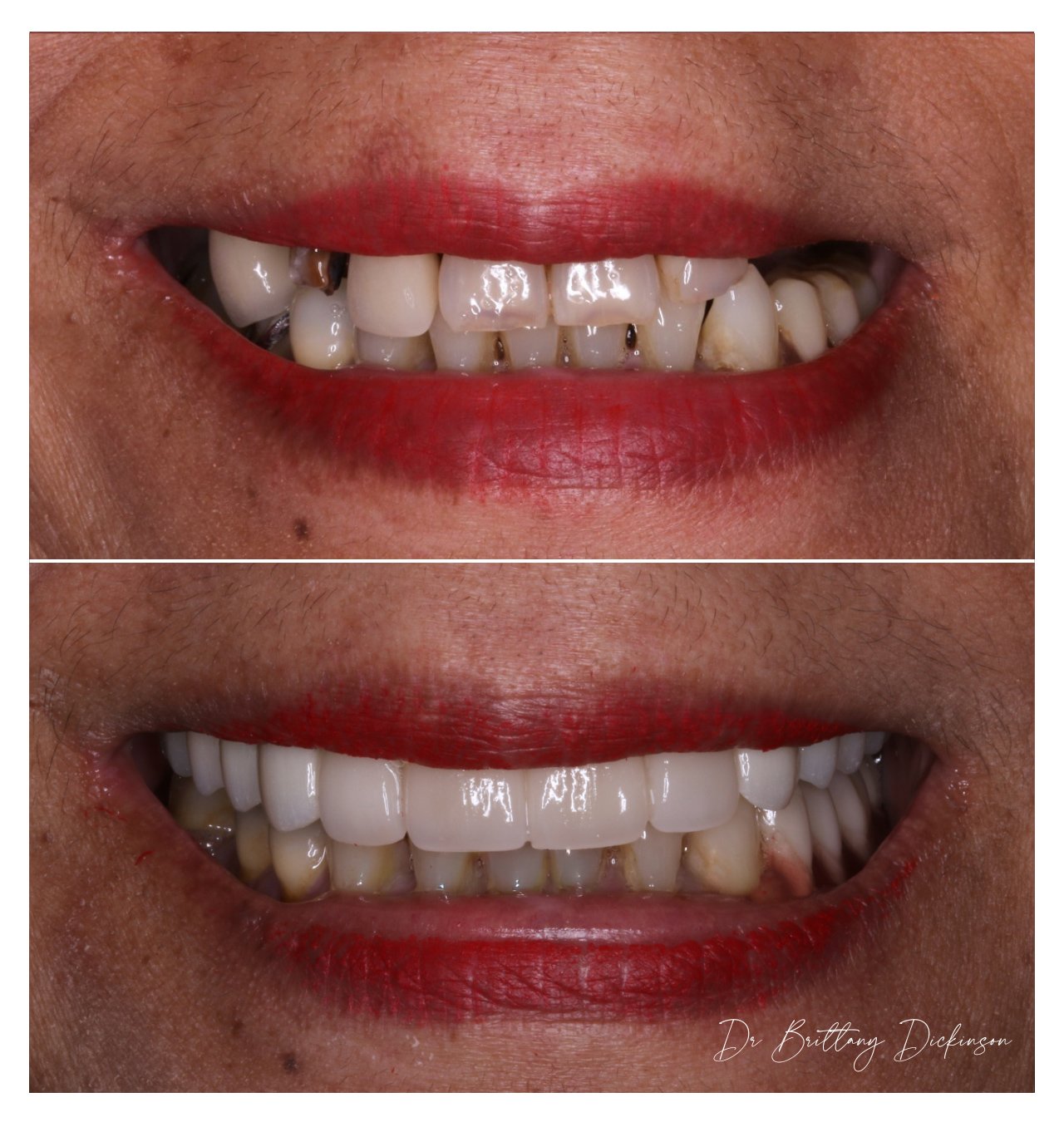
A lot of patients who've been away for years come back not just for hygiene — they come back because they've quietly wanted veneers, Invisalign, or whitening for a long time. They didn't come in because they assumed they had to "earn" the cosmetic conversation by fixing everything else first.
You don't.
You can absolutely come in, get the foundational health caught up, and start having the cosmetic conversation in the same visit — or the next one. There is no penalty period. We design the plan around what you want your smile to look like, and we sequence the foundational work to support that goal.
Many of our most beautiful smile transformations started exactly this way. A patient who'd been avoiding the dentist for years walked in, started slow, built trust, and twelve months later was looking at her own smile preview before her veneer case began. That story is more common than the "I've been a perfect patient my whole life and now I want veneers" story. By a lot.
The First Step
If you've been holding off for years — for any of the reasons above, or for reasons you've never told anyone — the work is not as scary as the waiting.
When you're ready, you can book a Smile Design Consultation at our Lakeview office. It's the slowest, most conversation-led appointment we offer. No instruments unless you want them. No pressure. No surprise plan at the end.
You decide what happens next.