

How to Keep Your Smile Investment Looking New for 10+ Years
If you've invested in cosmetic dentistry — veneers, bonding, a full smile makeover — the question I hear most in follow-up appointments isn't about the work. It's about keeping the work. Six months in, patients ask me: "How do I actually take care of these? What am I supposed to be doing differently?"
The honest answer is: less than you'd think, but the small things matter.
I'm Dr. Brittany Dickinson, cosmetic dentist and owner of Chicago Aesthetic Dentistry in Lakeview, and a member of the American Academy of Cosmetic Dentistry (AACD). Here's the real, straightforward maintenance guide I give every cosmetic patient — the habits that will keep porcelain veneers, cosmetic bonding, and smile makeovers looking like the day we bonded them, for 10 or more years.
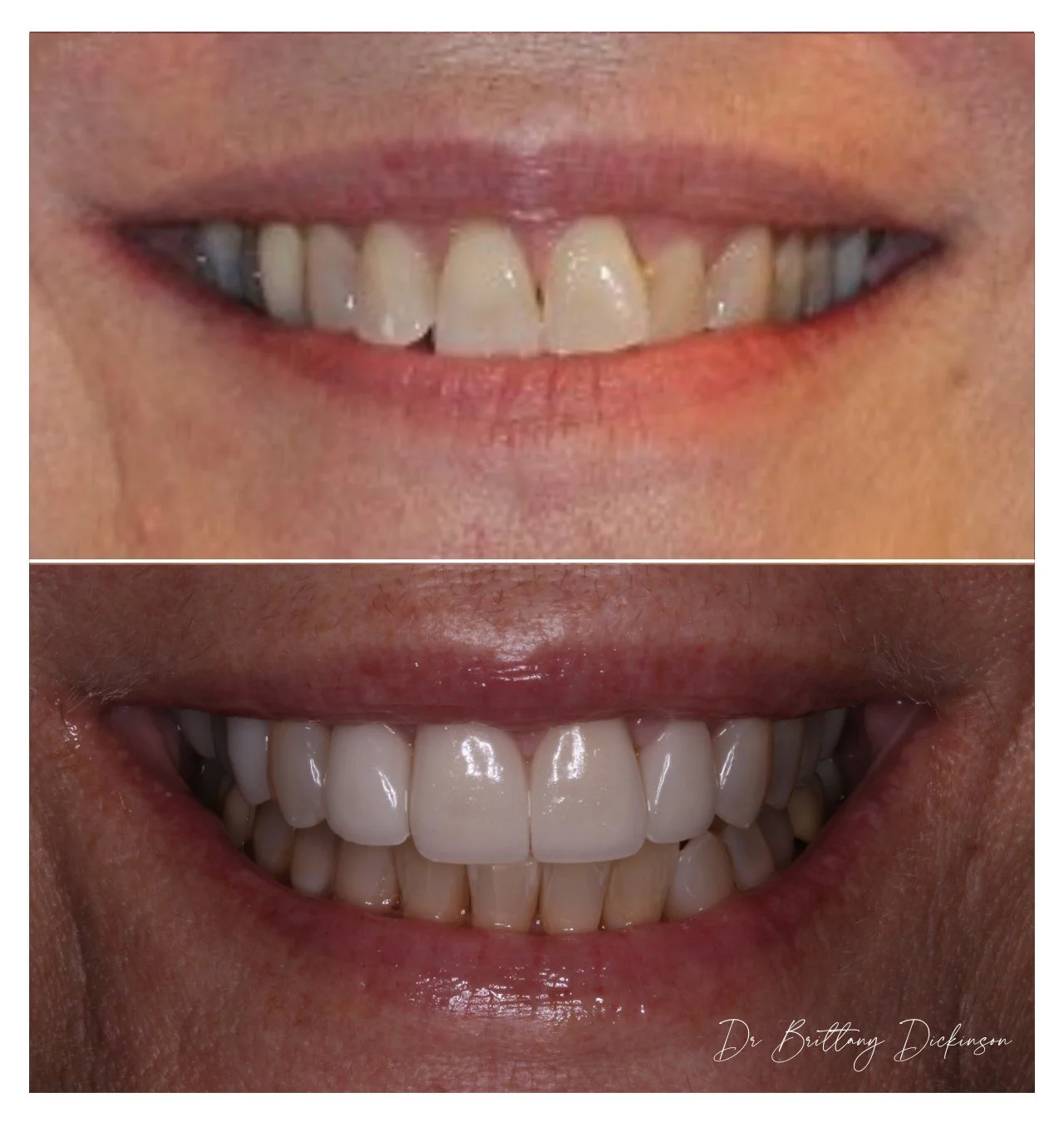
The truth about longevity
Porcelain veneers typically last 10 to 15 years. That's the honest range — you'll see some marketing quote 20+, but in my experience across 15 years of practice, most well-cared-for veneers land in the 10–15 window before they need replacement or refresh.
What determines where in that range you land? Almost entirely how you treat them at home and how consistently you keep your hygiene appointments. The dentistry itself was done in a few weeks. The next decade is on you — with a little coaching from us.
Daily habits that matter
1. Brush twice a day with a soft-bristle brush
Not medium. Not firm. Soft. Any electric toothbrush with a pressure sensor is ideal — Sonicare, Oral-B iO, or similar. Hard bristles and aggressive brushing can wear the polish off the porcelain over time, and can accelerate gum recession, which is what actually makes veneers "look old" (a dark line where the veneer edge meets receded gum tissue).
2. Use a non-abrasive toothpaste
Look for relative dentin abrasivity (RDA) under 100. Sensodyne Pronamel, Colgate Total Enamel Health, and most non-whitening pastes are fine. Skip the aggressive "whitening" pastes with heavy pumice or charcoal — they can scratch the porcelain glaze microscopically over years, dulling the shine.
Your veneers won't get whiter from whitening toothpaste (porcelain doesn't stain and doesn't bleach). Whitening pastes only affect natural tooth structure, so their only job on veneers is being unnecessarily abrasive.
3. Floss every night
Every. Night. Not because your teeth are more fragile, but because the gum tissue around veneers needs to stay healthy — recession is the enemy of a beautiful veneer smile, and it's driven by inflammation. Regular flossing keeps gums pink, tight, and where we designed them to be.
Water flossers are great supplements but not replacements. Use both if you can.
4. Wear your nightguard
Every night. Non-negotiable.
At my practice, every veneer patient gets a custom nightguard as part of their treatment. Not "if you grind." Not "when you feel stressed." Every night, forever. Here's why: almost everyone clenches or grinds during sleep, whether they realize it or not. Even mild forces multiplied by 8 hours a night, 365 nights a year, over a decade, will chip, crack, or debond porcelain.
A nightguard is a $500 investment that protects a $25,000 investment. That math should be obvious. The patients I see whose veneers need premature replacement almost always share one thing in common: they stopped wearing their nightguard.
Foods and drinks: what to actually avoid
Things to genuinely avoid
Biting directly into hard foods — apples, corn on the cob (cut it off first), whole raw carrots, hard candies. Slice them first. Your veneers can handle chewing, but biting into something hard puts leverage on the front edges where they can chip.
Using your teeth as tools — no opening plastic packaging, ripping tape, tearing tags off clothing. Sounds obvious. People still do it.
Ice chewing. Full stop. Same for hard pretzel bits, popcorn kernels, and bones.
Things you don't need to avoid
Coffee. Wine. Tea. Berries. Curry. Porcelain doesn't stain the way natural enamel does. Drink your morning coffee. Have red wine at dinner. The color of your veneers is locked in.
Steak, chicken, most vegetables — no restrictions.
Chewing gum — completely fine, and can actually help stimulate saliva flow.
That said, if you also have natural teeth alongside your veneers (which most patients do — usually the back teeth, and sometimes the lowers), those can stain. Regular whitening touch-ups on the natural teeth keep the whole smile uniform. We handle this at your maintenance visits.
Habits that ruin veneers faster than anything else
I've done this long enough to know which habits are killing cosmetic dentistry six months in. The top offenders:
Skipping the nightguard. Already covered. The biggest one.
Stress clenching during the day. If you catch yourself with your jaw clenched at your desk, that's a sign. We can talk about daytime awareness strategies and sometimes prescribe a lightweight daytime appliance.
Aggressive brushing. More pressure ≠ cleaner. Let the brush do the work. Two minutes, gentle circles.
Missing hygiene visits. Every 6 months at minimum. For some cosmetic patients, every 4 months is smarter — we can assess this at your maintenance appointments.
Nail biting. Same forces as biting into hard food. Multiplied by hundreds of times a day.
Chewing on pens, pencils, ice, hard mints. All of the above.
If you catch yourself doing any of these, don't panic. Just stop the habit. The damage from occasional slip-ups is minimal. The damage from years of unaddressed habits is what shortens the lifespan of the work.
What to expect at maintenance visits
At Chicago Aesthetic Dentistry, cosmetic patients come in every 6 months for a full hygiene visit and cosmetic check. Here's what happens:
Professional cleaning — with instruments and polishes safe for porcelain (not everything is; make sure your hygienist knows you have veneers).
Full cosmetic assessment — I personally check the margins, bite, polish, and gum tissue around each veneer.
Nightguard check — we look for wear patterns that tell us how you're clenching, and adjust as needed.
Touch-up whitening on natural teeth — usually every 12–18 months to keep the whole smile uniform.
Polishing — porcelain doesn't need polishing constantly, but a professional polish every year or two keeps the surface pristine.
Total time: about 60 minutes. Most patients book this over lunch or first thing in the morning before work.
When to call us sooner
Don't wait until your next scheduled visit if any of these happen:
A chip or crack — we can often repair it in a single appointment
A veneer that feels loose — very rare, but if it happens, call us the same day
Sensitivity that appears out of nowhere — usually not a veneer issue, but worth checking
Gum bleeding or inflammation around a specific tooth — early gum issues are much easier to fix than late ones
A cracked or worn nightguard — we replace them every 3–5 years, sometimes sooner
The bottom line
Cosmetic dentistry, done well, is more resilient than most patients expect. You don't need special toothpaste, expensive gadgets, or a fussy routine. You need to brush gently, floss nightly, wear the nightguard, keep your six-month visits, and slice your apples.
That's the whole list. Do those five things, and you'll get every year out of your investment.
If you're already a patient of ours and haven't been in for maintenance in a while — call us. If you had cosmetic work done elsewhere and want a second opinion on how it's aging or how to protect it going forward, we're happy to help with that too.
Ready to book? Call 773-883-1818 or book a Smile Design Consultation online. Chicago Aesthetic Dentistry — 3346 N. Paulina St., Lakeview.
written by Dr. Brittany Dickinson