

What Real Smile Makeover Results Look Like: A Chicago Cosmetic Dentist on What's Actually Achievable
The first question almost every smile makeover patient asks me — usually before we've even sat down — is some version of the same thing:
"Will it look real?"
Not "will it look perfect." Not "will it look like a celebrity's." Real. As in, "Will it look like me on a really good day, or will it look like I did something?"
That question is the entire reason I do this work the way I do. And it's why I want to spend the next few minutes walking you through what real smile makeover results actually look like — what's achievable, what to look for, and how to tell the difference between a before-and-after that's honest and one that's been over-corrected into obviousness.
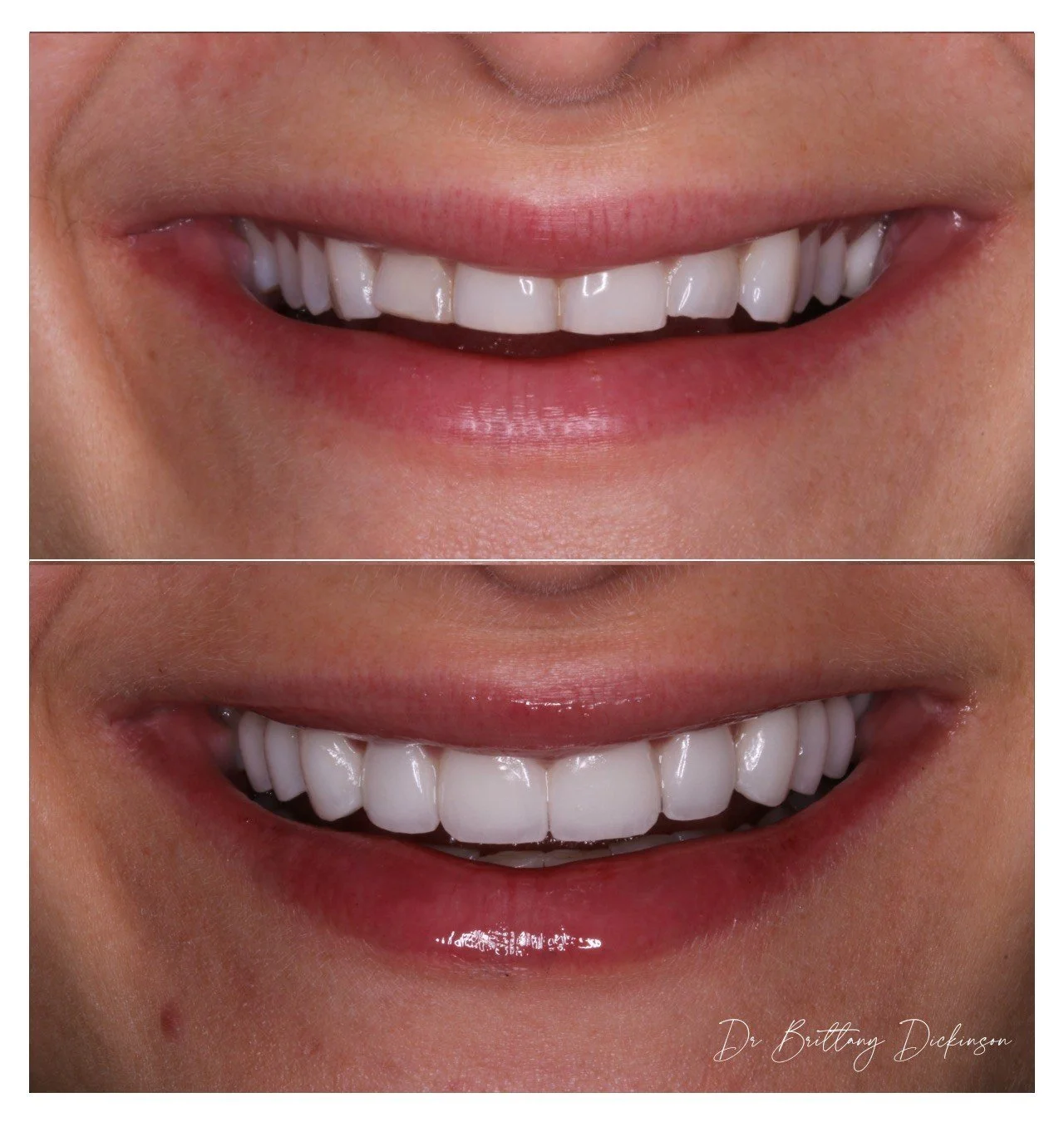
Why "Before and After" Photos Can Be Misleading
Let's start with the elephant in the room: most smile makeover before-and-after photos you see online have been aggressively edited, over-whitened, or shot with lighting that flatters the result to the point of dishonesty.
Real photos have shadows. Real teeth have subtle translucency at the edges. Real smiles reflect natural light differently in the morning than in a Photoshop layer. When every "after" photo you see is blindingly white with perfectly flat lighting, what you're looking at isn't a smile — it's a marketing render.
The first thing to look for in a real before-and-after: does the "after" look like it belongs on a person? Does it have depth, translucency, subtle color variation between teeth, and shape that responds to the patient's face? Or does it look like a row of piano keys someone Photoshopped over the top of the original photo?
Real results have subtle imperfection built in on purpose. That's the tell.
What "Natural-Looking" Actually Means in a Real Smile Makeover
The industry throws around the phrase "natural-looking veneers" or "natural-looking smile makeover" without ever defining it. Let me tell you what it actually means from the chair.
A natural-looking smile makeover result has:
Translucent incisal edges — the tips of the front teeth catch light differently from the body of the tooth, because that's how real enamel works.
A shade that flatters your skin tone — not the whitest possible, but the whitest that still looks like it belongs to your face at your age.
Slight variation between teeth — real teeth are not identical. A smile makeover that ignores this ends up looking like a template.
Length and shape proportional to your lip line — teeth that peek naturally when you talk, show fully when you laugh, and don't over-fill your smile at rest.
A midline that respects your face — the space between your two front teeth should align with the center of your face, not the center of your teeth.
These are all invisible details when they're right. They're the first things anyone notices when they're wrong.
What's Actually Achievable — And What Isn't
Let me be truthful about what a smile makeover can and can't do, because expectation calibration matters more than any before-and-after photo.
Achievable, reliably:
Correcting minor to moderate crowding (Invisalign)
Brightening shade by 6–10 levels safely (KöR whitening)
Closing gaps of any reasonable size (bonding, veneers, or Invisalign)
Rebuilding worn, chipped, or short teeth to their proper proportions (veneers)
Correcting the shape of individual teeth without touching the others (bonding or single veneer)
Redesigning a smile line so it flatters the face (porcelain veneers)
Reproportioning the gum line if it's uneven (gum contouring)
Achievable with the right plan and time:
Full smile transformations (Invisalign + whitening + veneers, sequenced over 12–18 months)
Correcting bite issues while improving aesthetics
Restoring a smile after significant wear from grinding
Not achievable in a cosmetic-first practice:
Replacing what an oral surgeon or periodontist should do
Correcting severe skeletal issues (that's an orthodontist + oral surgeon conversation)
Making a smile look "brand new" in a way that ignores your age and face
If a Chicago cosmetic dentist is promising you a result that lives in the third category, that's a signal to slow down, not speed up.
The Difference Between an "After" That Looks Like You and One That Doesn't
I use a term with my patients called facially driven smile design, and it's the reason I believe my results look like the patient — not like a template of "nice teeth."
Most dentists design smiles in isolation. They look at the teeth, decide what a "textbook nice smile" would look like, and build toward that. The problem: a textbook smile grafted onto the wrong face reads as wrong instantly, even to a viewer who can't articulate why.
I design smiles in relation to the patient's face — their face shape, their jawline, the way their upper lip drapes when they talk, the way it lifts when they laugh, the proportions of their features. Then I position teeth to support that specific face, in a way that looks natural at rest and beautiful in motion.
This is why our before-and-afters have a common quality that's hard to describe: they look like the patient, on a really good day. Not like the patient wearing someone else's smile.
A Real Case: What "Natural" Looks Like in Practice
I want to walk you through a recent case at our practice, because it illustrates what an honest smile makeover result actually looks like.
The patient came in with worn front teeth from years of clenching, mild crowding on the lower arch, and a shade that had darkened gradually over the last decade. She didn't want a dramatic transformation. Her words: "I want to look like me, just less tired."
Her plan came together over about ten months: Invisalign to bring the lower teeth into alignment, KöR whitening to reset the shade to the brightest natural-looking level for her face, and six porcelain veneers on the upper front teeth — designed to rebuild the length she'd worn away and match the shape her smile had before the wear started.
The after photo doesn't look like a Hollywood transformation. It looks like she does at the end of a great vacation. Rested. Bright. Herself.
That's the result most of our patients are actually asking for, whether they know how to describe it or not.
What to Look For When You're Vetting a Chicago Cosmetic Dentist
If you're comparing before-and-after galleries as part of choosing a cosmetic dentist in Chicago, here's what to look for:
Are the "after" photos too white to be real? Over-whitening is the fastest way to spot a practice that doesn't design for the face.
Do the "after" teeth all look identical? Real smiles have subtle variation. A row of matched piano keys is a red flag.
Do the smiles look like they belong on the faces they're attached to? Or do they look like the same "nice smile" pasted onto different people?
Are there full-face before-and-afters, not just close-ups of teeth? The face-and-smile relationship is the whole point.
Does the practice explain their design philosophy anywhere? If the only thing the website says is "we do veneers," that tells you where their attention is.
The gallery is the truth-teller. Trust what it shows.
What Happens at a Chicago Smile Design Consultation
A Smile Design Consultation at our Lakeview practice is 60–90 minutes. We look at your teeth in the context of your face. We talk about what you actually want your smile to feel like — not just what you want it to look like. We map a plan. And whenever possible, we use digital smile design tools to give you a preview of what the result could look like before anything is permanent.
You leave with a real understanding of what's achievable for your specific smile, a written plan, and no pressure to book anything until you're ready.
When You're Ready
If you've been holding back on a smile makeover because you're not sure whether the result will look real — or because every before-and-after gallery you've scrolled through has felt too polished, too whitened, or too obvious — that's exactly the conversation a Smile Design Consultation is for.
Book a Smile Design Consultation or call the office at 773-883-1818. We're at 3346 N. Paulina St. in Lakeview, Monday through Thursday.
The best smile makeovers don't announce themselves. They just look like you, at your best.