

What "Conservative Veneers" Actually Mean (And Why It Matters for the Next 20 Years of Your Smile)
The single most common question I get in a veneer consultation isn't about cost, timeline, or shade.
It's some version of: "Will this ruin my real teeth?"
That question comes from a real place. Somewhere between the celebrity regret stories, the reality-TV before-and-afters, and the Reddit threads, the word "veneers" has picked up an association with aggressive drilling — the idea that you sign up for a bright smile now and pay for it forever in root canals and problems later.
That version exists… it's just not the only version. And it's not how I practice personally.
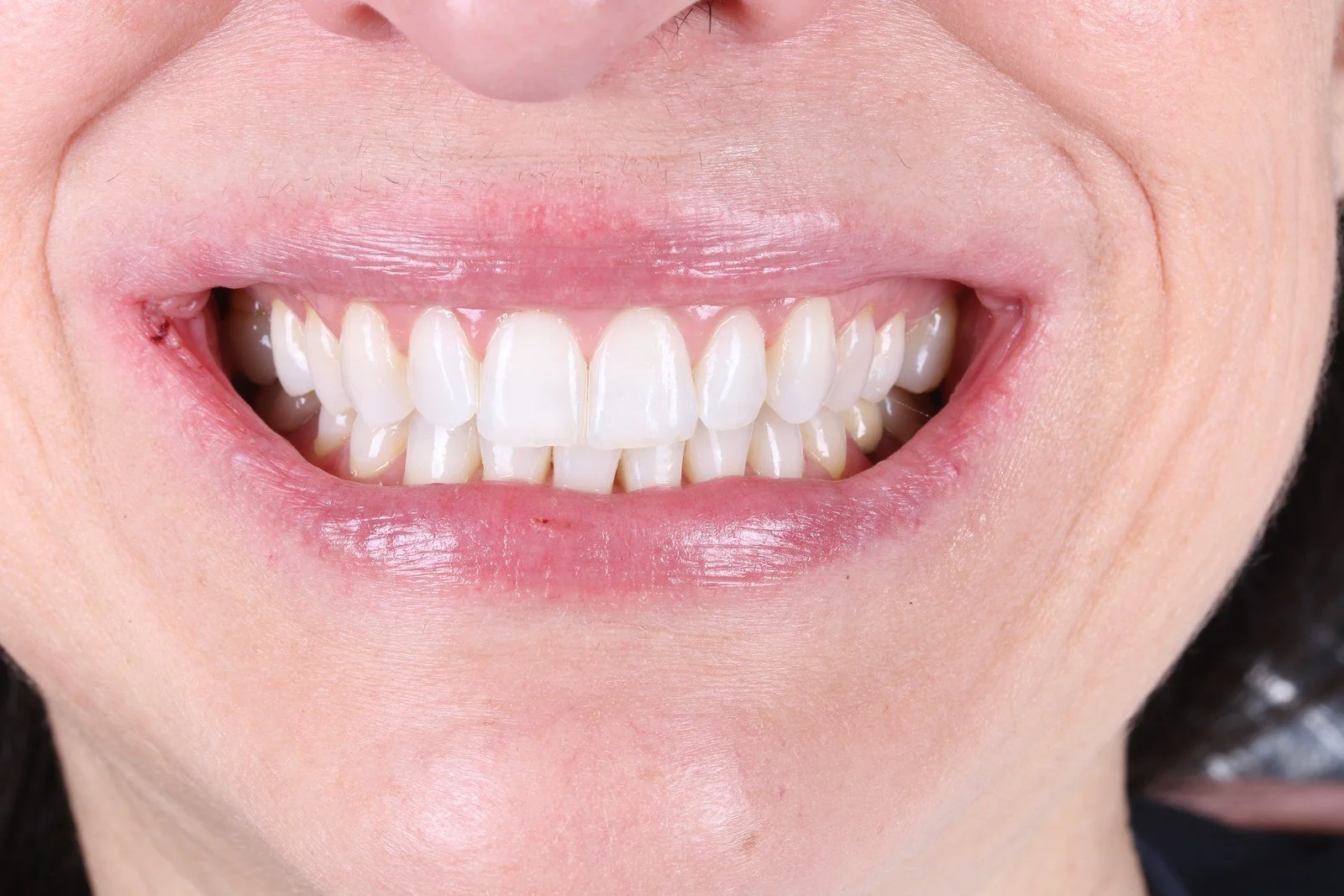
Here's what "conservative veneers" actually means, why it matters for the long game, and how to know whether the dentist you're talking to legitimately practices this way, or whether they’re just using buzzwords.
The Prep Spectrum: From No-Prep to Traditional
"Veneers" is a category, not a technique. Within it, there's a spectrum of how much of your natural tooth structure gets reduced before the porcelain is bonded on.
No-prep veneers. Nothing is removed from the tooth. The porcelain is bonded onto the front surface as-is. This is the most conservative option — but it's only right for a narrow set of cases.
Minimally invasive veneers. A very thin layer of enamel is removed — often less than half a millimeter — to allow the veneer to sit flush and look natural. This is the most common conservative approach in modern cosmetic dentistry.
Traditional veneers. More significant enamel reduction is done to accommodate thicker porcelain, to correct larger shape or position changes, or to mask darker teeth. Still a legitimate option in the right case.
The mistake is treating one of these as "the right answer" for every patient. All three have their place. The question is which one is actually right for you — and whether the dentist you're consulting has enough range to offer all three.
Why Preserving Enamel Matters (Especially in Your 30s and 40s)
Your enamel is the outermost, hardest layer of your tooth. It's what protects everything underneath. And here's the part that's easy to forget in your thirties or forties, when the decision feels like it's just about your smile now: enamel doesn't grow back.
Every micron of natural tooth structure you keep is protection you get to carry into your fifties, sixties, and seventies. When we're planning a veneer case in my Lakeview practice, one of the questions I'm asking myself is: "How does this decision look in 20 years?" Not just how it looks in the reveal photo.
Conservative veneers make the answer to that question much easier. Less enamel removed now means:
Fewer complications if a veneer ever needs to be replaced
A stronger foundation if you ever need any other dental work on that tooth
Better long-term gum health around the veneer margins
A tooth that's still your tooth underneath
This is the part of the conversation that a lot of veneer marketing skips. It shouldn't.
When No-Prep or Minimal-Prep Is the Right Answer (And When It Isn't)
Conservative veneers aren't a marketing slogan you can just apply to every case. They're the right technique for specific situations. Here's how I think about it:
No-prep is a good fit when:
Your teeth are slightly smaller than ideal for your face (undersized)
Your smile has small gaps you want to close
You want a subtle brightening and shape refinement
Your alignment is already good or has been corrected with Invisalign first
Minimally invasive prep is the right answer when:
Your natural teeth are the correct size but need shape refinement
You want a moderate shade change
You have minor chips, wear, or asymmetry to correct
You want a natural, undetectable result and you have good underlying alignment
Traditional prep is honestly warranted when:
Your teeth are significantly darkened (from prior root canals, tetracycline staining, or trauma)
Your teeth are notably crowded or rotated and you're not willing to do Invisalign first
The desired shape change is significant enough that thinner porcelain won't achieve it predictably
The critical thing to understand is that a good cosmetic dentist should be able to give you an honest read on which category you're in — not just default to their most-comfortable technique.
The Case for Doing Invisalign First
Here's a decision most patients don't know they have: if your teeth are crowded or slightly out of position, you can usually get a much more conservative veneer result by doing Invisalign first.
Straight teeth need less porcelain to look right. Less porcelain means less prep, and less prep means more of your natural tooth stays intact.
For patients in their thirties and forties who are planning to keep this smile for decades, this sequencing conversation is one of the highest-leverage decisions we make together. It sometimes adds 6 to 12 months to the total treatment timeline but It often subtracts significantly from how much natural tooth structure ever has to be reduced.
Whether it's right for you depends on your specific alignment. That's exactly the kind of decision we walk through at the Smile Design Consultation.
How to Tell If Your Dentist Actually Practices Conservatively
If you're vetting cosmetic dentists in Chicago and you want to know whether they'll actually take the conservative approach, these are the signals to look for:
They discuss the prep spectrum with you, not just their preferred technique.
A dentist who only ever does traditional-prep veneers doesn't have the range to offer you the most conservative option even when it would be right.
They talk about your natural tooth structure like it matters long-term.
If the entire conversation is about the "after" and nothing about what's preserved underneath, that's a signal.
They discuss Invisalign as a possible first step, not a competing service.
Cosmetic dentists who think in terms of long-term smile health will often recommend orthodontic prep before veneers when it's the right call.
They show you a preview of your smile before any prep begins.
In my practice, this preview step is standard. You get to see and feel confident in the design before anything is permanent.
They personally do the design and placement.
A veneer case is a design case first and a technical case second. The design decisions need to sit with the dentist who understands your face and your goals.
One Patient Story (Details Changed for Privacy)
A patient in her early thirties came in wanting eight veneers because she'd been told by another practice that was the only way to get the smile she wanted. Her teeth were mildly crowded, slightly darkened from years of coffee, with two small chips on her front teeth.
Here's what we actually did: Invisalign for nine months to correct the alignment. In-office whitening to lift the shade. Two minimally invasive veneers on the front teeth to correct the chips and refine the shape.
The total enamel reduced was less than half of what the original treatment plan would have required. the total number of veneers placed was two, rather than eight. It did take about a year longer than the original plan, but it was dramatically more conservative for the next several decades of her smile.
The Smile Design Consultation — Where This Conversation Starts
If you're considering veneers and you want to know what a conservative plan would look like for your specific smile, the Smile Design Consultation is where we work that out together. We'll look at your teeth, your face, your alignment, and your long-term goals — and I'll give you an honest read on whether no-prep, minimal-prep, or a combined plan with Invisalign is the right approach for you.
The best veneers aren't the ones that look the most dramatic in the reveal photo. They're the ones that still look right — and still leave you with a healthy underlying smile — 15 and 20 years from now.
Our Lakeview practice is open Monday through Thursday. You can book your Smile Design Consultation directly through our site or by calling 773-883-1818.