

Teeth Whitening Mistakes That Are Quietly Ruining Your Smile (And What to Do Instead)
Here's a question I've been getting more often lately: "Could I be whitening my teeth wrong?"
The honest answer is yes — and if you're asking, you probably sense something is off. Maybe your gums burn more than they should. Maybe your results look splotchy. Maybe your teeth look whiter but feel worse. Maybe you've been chasing a shade that keeps moving away from you.
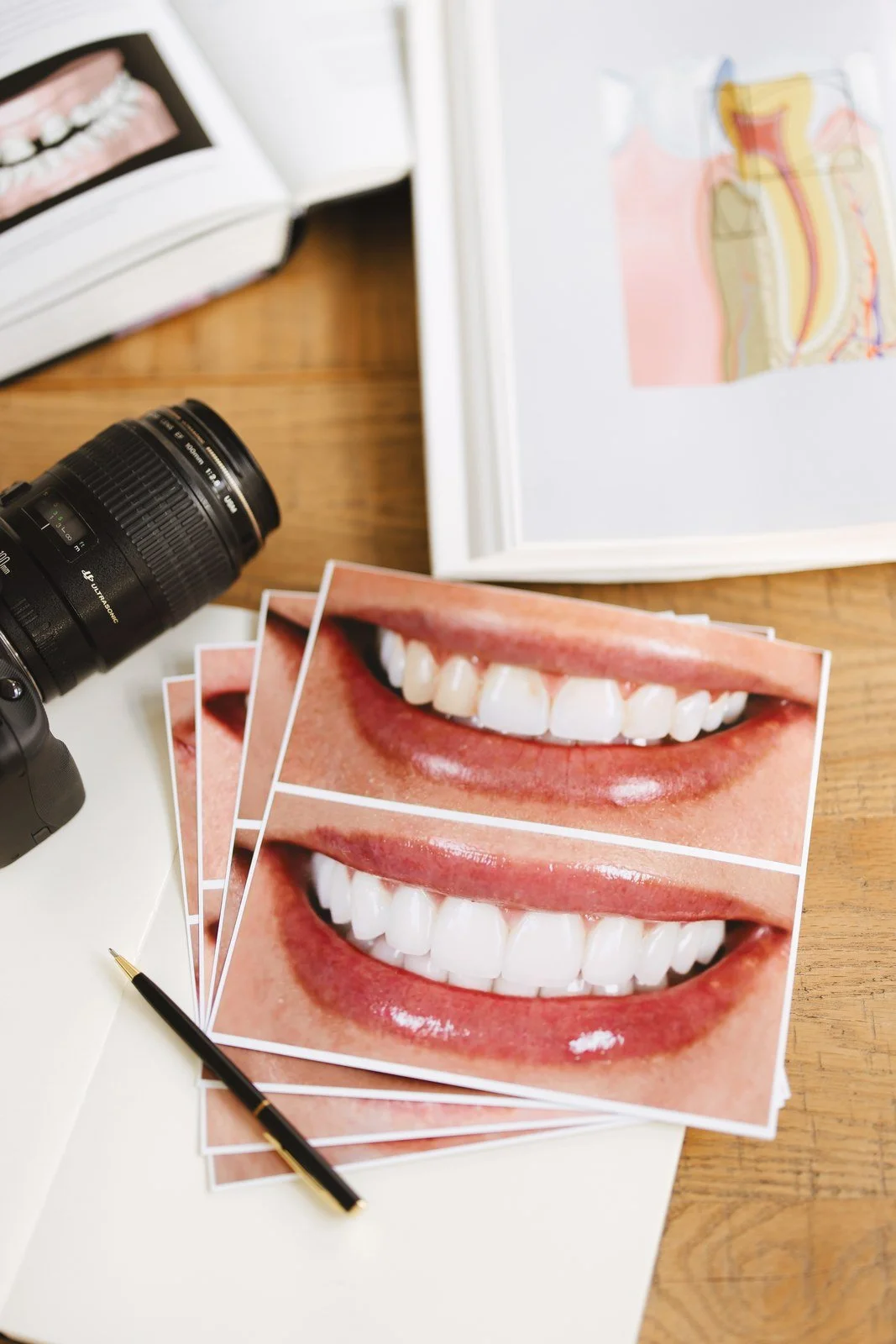
I don't blame patients for this. The whitening landscape is a mess right now. TikTok is full of hydrogen peroxide "hacks." Pharmacy shelves are stocked with LED kits that promise Hollywood results in a week. Charcoal paste is still floating around despite everything we know about its abrasiveness. It's easy to make a mistake without realizing it.
So let's walk through the ones I see most often in my chair in Lakeview — and what to do instead.
Mistake #1: Using Hydrogen Peroxide Straight From the Bottle
I've had three patients in the last six months arrive with chemical burns on their gums from swishing with drugstore hydrogen peroxide. One of them had been doing it twice a day for a month because she'd seen a video claiming it was "the secret dentists don't want you to know."
Here's the truthful version: dentists use hydrogen peroxide too. We just use it at tightly controlled concentrations, with custom trays that keep the gel on the enamel and off your soft tissue, for carefully timed sessions.
Drugstore hydrogen peroxide is 3% — low concentration, yes, but it's completely uncontained. It sits on your gums, your cheeks, the roof of your mouth. Repeated exposure causes chemical irritation at best and tissue damage at worst. The enamel-brightening effect is also minimal because the contact time with your teeth is so brief.
Do instead: If you want peroxide-based whitening, let it be delivered through a custom tray that keeps the gel precisely on your enamel. That's exactly what take-home professional systems do.
Mistake #2: Charcoal Toothpaste and Charcoal Powders
Charcoal is abrasive. More abrasive than most whitening toothpastes, which are already more abrasive than regular toothpaste.
In the short term, charcoal appears to whiten teeth — because it scrubs away surface stains along with a thin layer of your enamel. In the long term, it does the opposite of what you want. Thinner enamel reveals the yellower dentin layer underneath. Patients who use charcoal paste for a year often end up less bright than when they started, not more.
Do instead: For gentle daily brightening, look for toothpastes with low Relative Dentin Abrasivity (RDA) scores. Ask us at your next visit which brand we trust. Enamel is non-regenerating — once it's gone, it's gone — so protecting what you have is the single most important long-term whitening decision you can make.
Mistake #3: Over-the-Counter LED Kits Used Too Often
LED kits aren't inherently bad. The problem is how they're marketed and how patients use them.
Most drugstore LED kits deliver gentle peroxide gel and recommend 7–14 days of use. The patient sees a modest improvement and thinks: if 14 days worked, 28 days will work better. So she extends. Then she starts a new kit the next month. Then another.
What's actually happening: she's slowly stripping her enamel's hydration and causing hypersensitivity. The whitening plateaus around day 14, and anything after that is diminishing returns against increasing damage.
Do instead: If you've used an over-the-counter kit, treat it as a one-time thing. For brighter maintenance, invest in a professional-grade whitening pen (I carry Zoom QuickPro at my Lakeview office, around $50, and it lasts ~3 months). It's more precise, more effective per use, and designed to be used periodically — not continuously.
Mistake #4: Whitening Before a Cleaning
This one is subtle. Patients will book a whitening treatment before they've had their regular hygiene appointment, thinking they want to "come in looking their best."
Here's the problem: plaque and tartar on your enamel act as barriers. The whitening gel can't penetrate evenly through those deposits, which creates patchy results. Some areas brighten dramatically, others barely at all. You end up with a smile that's technically whiter but looks uneven in photographs.
Do instead: Always schedule a professional cleaning first. Whitening done on a freshly cleaned surface — ideally within a week of hygiene — delivers a dramatically more even result.
Mistake #5: Chasing a Shade That's Too White for Your Face
This is the aesthetic mistake, and it's the one I care about most as a cosmetic dentist.
There is a shade of white that reads as "healthy, bright, natural" on your particular face. And there is a shade just two or three stops past that where you start to look like you had something done. The line is subtle. Most patients walk past it without realizing because the whitening gel is still working.
If your teeth start reading blue-white in photos, if people are complimenting your teeth before anything else, if you've crossed from "wow, you look great" to "wow, your teeth look great" — you've gone too far. The brightest shade isn't always the most beautiful one.
Do instead: At your consultation, we match a shade to your facial undertone, skin tone, and the lip-draping that happens when you smile naturally. This is part of what I mean when I say every smile I design is drawn from the face outward, not from a shade guide inward. The brightest smile that still looks like yours — that's the sweet spot.
Mistake #6: Ignoring Sensitivity Signals
A little sensitivity for 24–48 hours after a professional treatment is normal. Sharp, lingering, cold-air sensitivity for weeks is not.
Patients who push through severe sensitivity to keep whitening often cause irritation that lingers for months. Enamel exposed to repeated chemical irritation doesn't just hurt — it becomes more vulnerable to future staining, decay, and wear.
Do instead: If whitening is causing significant sensitivity, stop and come in. There are gentler, sensitive-teeth-safe systems — KöR being the one I recommend most often — that deliver real results without the burn. The suffering is not a prerequisite.
Mistake #7: Whitening Teeth Right Before Veneers or Bonding (In the Wrong Order)
Veneers and bonding don't respond to whitening. They don't lighten. They stay the shade they were made in.
If you whiten your natural teeth after veneer or bonding placement, you end up with a two-tone smile — the restorations look darker than the surrounding teeth, sometimes dramatically. The right order is almost always: whiten first, let the shade stabilize for about two weeks, then design any restorations to match the brighter result.
Do instead: If you're considering veneers or cosmetic bonding, bring up whitening at the consultation. We sequence everything in the right order so your final result is cohesive.
What Smart Whitening Actually Looks Like
Here's the pattern I see in patients whose smiles stay beautifully bright for years, without damage:
They start with a professional consultation to match the system to their enamel, sensitivity, and goals
They get a hygiene cleaning before whitening to maximize evenness
They complete the treatment, then protect their enamel with a two-week post-treatment diet shift
They touch up strategically — not continuously — using take-home trays or whitening pens
They stop before they chase a shade that doesn't suit their face
They talk to a cosmetic dentist (not a TikTok comment section) when something feels off
None of this requires a $25,000 investment. For most patients, professional whitening in Chicago costs between $50 (a whitening pen) and $1,100+ (a full KöR system) — and the right one for you depends entirely on where you're starting from and what you're trying to achieve.
The Smile Design Consultation — Where This Conversation Starts
If you've been whitening on your own and want someone to help you reset the plan — or if you're starting from scratch and want to do it right the first time — a Smile Design Consultation is where that conversation starts. We'll look at your enamel, your current shade, your sensitivity history, and the result you actually want, and we'll build a plan that gets you there without the damage.
Our Lakeview practice is open Monday through Thursday at 3346 N. Paulina St. You can book a consultation directly through our site or by calling 773-883-1818.
The smartest whitening isn't the most aggressive. It's the most tailored. Done well, your smile stays bright, your enamel stays strong, and your face still looks like yours — just the version of you that's lit from the inside.