

Most content about porcelain veneers stops at the before-and-after photo.
The patient smiles for the camera, the reveal gets a thousand likes, and that's where the story ends. What almost nobody talks about — and what every one of my patients wants to know before they commit — is what happens after the final appointment. What does the first week feel like? What can you eat? What's the nightguard really for? Will they stain if you still drink red wine on Tuesday nights? And the big one: how do I make this last?
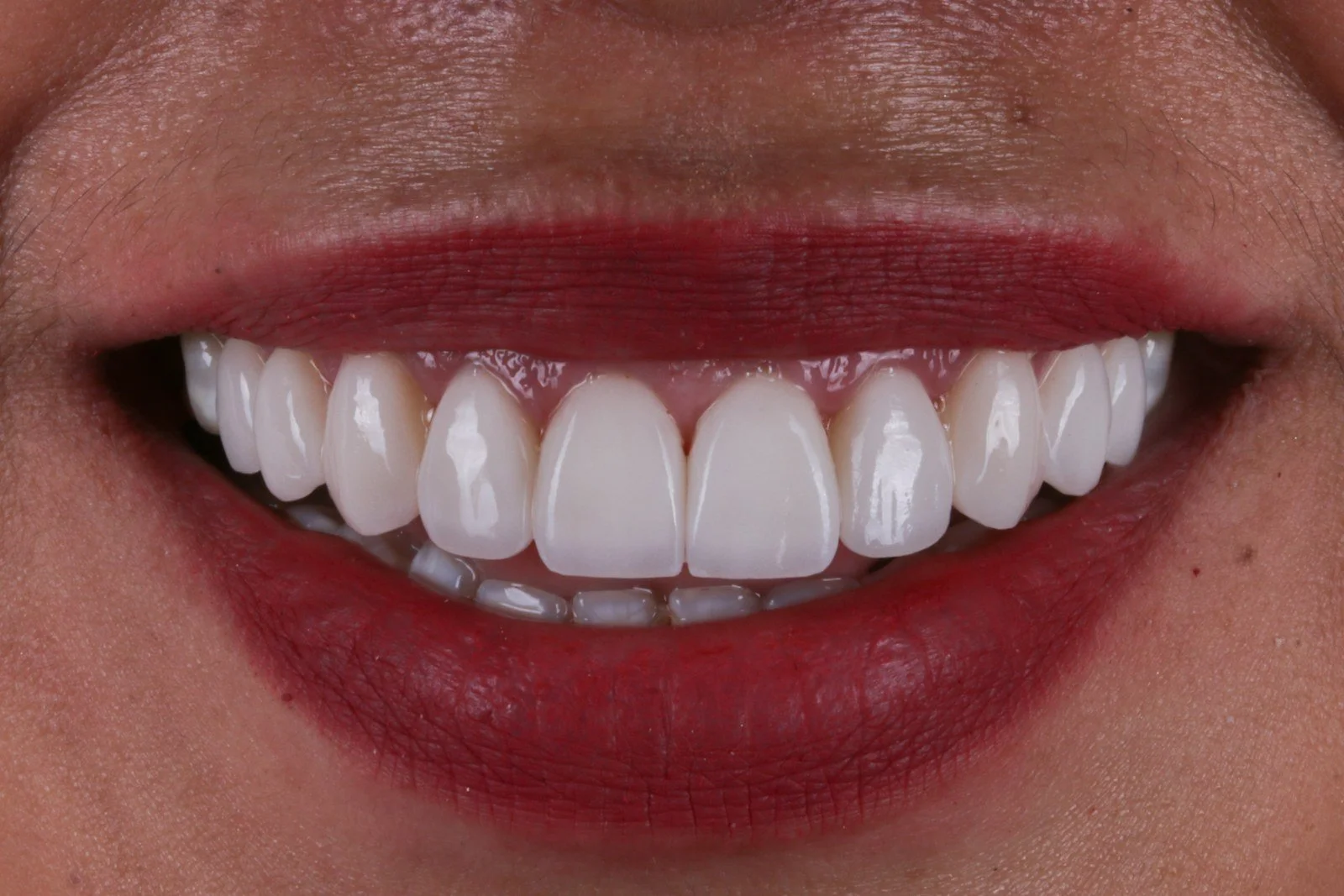
I've placed hundreds of veneers in my Lakeview, Chicago practice, and I've been following many of those patients for years. Here's an unhurried, honest walk-through of what life with veneers actually looks like — the first week, the first month, the first year, and the decade beyond.
The First Week: What's Normal, What's Not
Right after your final seat appointment, the veneers are permanently bonded to your natural teeth. You'll walk out of the office with your real smile — the one we previewed together before any permanent work was done, so there are no surprises.
In the first few days, expect:
Some tenderness in the gum tissue right along the margins. Your gums have been worked around; they're mildly irritated. This usually resolves within three to five days.
A slight sensitivity to cold on a few teeth. Normal, and almost always temporary — most patients notice it fade within a week or two.
A new feeling of fullness where your upper lip meets your teeth. This is because the shape and length of your teeth are now exactly where they should be aesthetically — which may be slightly different from the shape you lived with for years. Your lip adjusts within a week.
Speaking will feel a little different for the first day or two, especially s and f sounds. Patients are often convinced it's permanent. It never is. Your tongue recalibrates in 24–72 hours.
What's not normal: any sharp pain, bite that feels obviously high on one tooth, or a veneer that feels like it's moving. Any of those, I want to see you — small bite adjustments early on protect you long-term.
The First Month: Eating, Drinking, and Living Normally
Here's the sentence patients most want to hear: once the veneers are bonded, there's essentially no restriction list.
You can eat salads and steak and corn on the cob. You can drink coffee, red wine, matcha, and espresso. You can bite into a sandwich. You can go about your actual life.
A few sensible notes that apply to porcelain veneers the same way they apply to natural teeth:
Don't use your front teeth as tools. No opening packages with your teeth, no biting fishing line, no chewing ice cubes, no pens between the incisors during long meetings. This is good advice for your natural teeth too — it's just non-negotiable with veneers.
Be mindful with hard, round objects. Olives with pits, cherry pits, popcorn kernels, small bones. Not forbidden, just worth a half-second of attention.
Red wine and coffee don't stain porcelain the way they stain natural enamel. This is one of the real advantages of porcelain over composite bonding — the surface stays bright. Your bonding margins can accumulate a little surface staining over years, which is one of the things we polish at your routine visits.
Keep your routine cleanings on schedule. Twice a year, no exceptions. Veneers don't change your need for professional cleanings — they slightly increase it, because the margins where porcelain meets tooth are what we're monitoring.
I tell patients: live your life. Veneers are designed to disappear into it, not become a project you manage.
The Nightguard Conversation (This One Matters)
Every single patient who leaves my practice with porcelain veneers also leaves with a custom-fit nightguard. Not optional, not an upsell — a non-negotiable part of the treatment plan.
Here's why. Most adults clench or grind at some level, often without knowing it. Stress, caffeine, sleep posture, and simple genetics all play roles. Natural enamel can tolerate a surprising amount of grinding force. Porcelain is beautifully durable in normal function, but it's also a brittle material under uneven lateral stress. The number one preventable cause of a cracked veneer, in my experience, is nighttime grinding without protection.
A professionally made nightguard — thin, clear, custom-molded to your bite — eliminates that risk almost entirely. You wear it when you sleep. You don't notice it after the first week. And it protects a smile investment that's designed to last 10 to 15 years.
I include nightguard fabrication in every veneer treatment plan and I will decline to place veneers for a patient who tells me they won't wear one. That rule has protected a lot of smiles.
The First Year: What to Pay Attention To
Over the first twelve months, here's what we're watching together:
Gum health around the margins. Healthy, pink, tight gum tissue is the foundation of a veneer that still looks beautiful ten years from now. We check this at every six-month visit.
Bite stability. As your mouth settles into the new tooth positions, we may make tiny adjustments to make sure forces are evenly distributed when you chew.
Shade comparison with your lower teeth. Your lower teeth are still natural, and natural teeth yellow slowly over time. If you want them to stay in balance with your veneers, we may plan light touch-up whitening of the lowers at year three or four. For patients who had veneers made intentionally in a slightly warmer, natural shade, this often isn't needed for the first five years.
Any new sensitivities. Rare in the first year, but worth mentioning if they appear — sometimes a small bite tweak solves it.
You should feel, by month three or four, like you've forgotten you had anything done. The veneers should disappear into your face. If they don't — if something still feels "off" — I want to know, because small adjustments early on are much easier than larger ones later.
The Decade (And Beyond): Making Veneers Last 15+ Years
Properly designed, properly bonded, and properly protected, porcelain veneers typically last 10 to 15 years. In my practice, I have patients hitting year eight and nine with veneers that look exactly as they did on seat day. A few things make the difference between a 10-year veneer and a 15-year veneer:
The nightguard, worn consistently. Every night. Not just stressful nights.
Routine professional cleanings. Not just for the veneers — for the gum tissue that holds them.
A conservative preparation to start with. This is upstream — it's about how the veneers were designed in the first place. The more natural tooth structure preserved, the stronger the long-term bond. This is why I prep conservatively, even when it means a slightly more technique-sensitive case.
Addressing bite shifts early. If an orthodontic relapse starts to move the lower teeth, we talk about Invisalign retention sooner rather than later. Shifting teeth put uneven force on veneers.
Not using them as tools. Still the single most preventable damage I see.
When a veneer does eventually need to be replaced — maybe at year 12 or 15 — the replacement process is typically straightforward. The underlying tooth structure, if preserved well the first time, can usually accept a new veneer with no additional preparation. That's one of the real long-term advantages of a conservative initial approach.
A Few Things That Surprise Patients in Year One
Compliments shift. The ones you want start happening. "You look rested." "Did you get your hair done?" "Something's different, I can't place it." The ones you dread — "did you have your teeth done?" — don't. That's the whole brief, and it's a real indicator of a well-executed facially driven design.
Confidence changes posture. Patients often tell me they didn't realize how much energy they'd been spending editing their smile until they stopped. Full laughs, open-mouth photos, speaking in meetings without self-monitoring — the mental bandwidth returns.
Maintenance is lower than expected. Most patients expect veneers to be high-upkeep. They aren't. Routine cleanings, a nightguard, normal brushing and flossing. That's the entire maintenance list.
When to Call Your Cosmetic Dentist
In the first year and beyond, reach out if:
A veneer feels loose or moves (very rare, but call immediately)
You notice a chip or crack (porcelain can occasionally chip; it's usually repairable)
Your bite suddenly feels different
You've lost or damaged your nightguard (we'll make a new one — don't wait)
You're preparing for a big event and want a polish or minor touch-up
Life with veneers, done well, should feel like life — just without the quiet editing you'd been doing before. The best possible outcome is that six months after your final appointment, you forget you had anything done at all. That's the result I design for in my Lakeview, Chicago practice: smiles that disappear into the face they belong to, and last for the next decade and a half of your life.
If you're in the consultation phase, or you've been considering veneers for a while and want to understand what the whole arc looks like before you commit, that's exactly what the Smile Design Consultation is for.